Learning to fly in Tanzania, plus my small PPL study app
TL;DR: My wife, a friend and I want to learn to fly small aeroplanes in Tanzania. I chose the standard PPL(A) route. I found five TCAA-listed providers with beginner pilot-training scope and asked Airplanes Africa too. Final group quotes are still pending. A Tanzanian PPL(A) has an EASA conversion route after at least 100 pilot hours and the required German checks. I built a public English study app with 90 original questions. It is a starter set, not an exam course by itself.
Three beginners and one standard licence
My wife, a friend and I want to learn to fly small aeroplanes in Tanzania. We are three beginners looking for private flying lessons, not an airline course. A website with a Cessna picture is easy to find. The hard part is a lawful course for the licence we want, with three real training places and a price that includes the things a school leaves out.
I started with my own old email. In January 2025 I wrote to Fly Zanzibar and asked whom I could talk to about a Private Pilot License. I found no reply. On 13 January 2026 ZRP answered an inquiry from my wife and me and said it could offer a light-sport aircraft PPL course. I asked for the price nine minutes later. I found no priced reply in that thread.
That old mail was useful, but it was not a school comparison. This time I searched the TCAA approved training organisation records, checked the approved course scopes and asked every beginner provider the same questions. I also asked Airplanes Africa because it works with light aircraft and has a simulator, although it was not listed as an ATO in the records I checked.
The first choice is the licence category. A microlight or light-sport course can need fewer flying hours. The standard PPL(A) costs more time but covers the normal aeroplane path. I chose PPL(A) because I want to fly Cessna-type aeroplanes and keep a documented route into the German EASA system later. The lighter licence would not give me that same route.
The schools I asked
The TCAA work left five institutions with ab-initio pilot-training scope in the checked records. An ATO record does not prove that the exact course, aircraft and satellite base I want are available now. It also does not prove that three students can start together next week.
These are the prices I could verify. I have not filled the gaps with estimates from forums or agents.
| Provider | Base | Verified price or current reply | What is still unknown |
|---|---|---|---|
| Zan Recreational Products, ZRP | Zanzibar Airport | USD 2,500 ground school plus 40 LSA hours at USD 200, so USD 10,500 per person before listed exclusions | PPL(A) package, current ATO renewal, exact three-person schedule and final fees |
| National Institute of Transport, NIT | Dar es Salaam, with flight lines named in the official course material | TZS 5,550,000 ground school plus 45 hours at TZS 648,000, so TZS 34,710,000 per person | A private three-person course, current off-cycle intake and excluded costs |
| Tanzania Pilot Training Centre, TPTC | JNIA Terminal 1, Dar es Salaam | No current final total. Its 28 October reply says a PPL typically takes 45 to 65 hours and 4 to 8 months, with rates under review | Current itemised quote and an intensive schedule for all three |
| Fly Zanzibar Training Center, FZTC | Zanzibar Airport | No current public total verified | Price, available aircraft, instructors and a guaranteed calendar time |
| Flight Training Centre, FTC | Arusha Airport | No current public total verified | Current local operation, price, aircraft availability and ATO renewal evidence |
| Airplanes Africa | Dar es Salaam office and Morogoro flight base | No ab-initio course price verified. No ATO certificate appeared in the checked register | Whether an approved ATO partner can provide the complete course |
ZRP's public package includes ground-school items such as registration, SPL processing, assessments, books, a logbook and a flight computer. It separately excludes the Class 2 medical, airport pass, TCAA written examination, English assessment, general flight test and pre-solo inspector fees. Those exclusions are why a headline tuition number is not the full cost.
There is also a calculated microlight figure. At ZRP's published rates, the unrestricted 25-hour PPL(M) path would be USD 2,500 plus 25 times USD 200, which is USD 7,500 per person before external fees. That is arithmetic from the public rate card, not a written offer from ZRP.
For three people, the two published core calculations are USD 31,500 at ZRP's 40-hour package and TZS 104,130,000 at NIT's 45-hour structure. Both still need an itemised quote for my actual group. I have not converted the shilling figure into dollars because I did not verify an exchange rate for this comparison.
PPL(A), PPL(M) and the hours
The standard Tanzanian PPL(A) has a clear regulatory floor. The applicant must be at least 17, hold a valid Class 2 medical and meet the English requirement, which is ICAO Operational Level 4 for the relevant proficiency. Ground training, a knowledge test and a practical skill test are required.
The flight-time minimum is 40 hours as pilot of aeroplanes, or 35 hours when the course qualifies as approved training. Up to 5 hours may be simulator credit. The total must include at least 10 solo hours, including 5 hours of solo cross-country flying. One solo cross-country flight must total at least 270 kilometres, or 150 nautical miles, with full-stop landings at two different aerodromes.
Those numbers are legal minima, not a promise that anyone finishes in 35 or 40 hours. TPTC's reply gives a more realistic planning range of 45 to 65 hours depending on performance. Aircraft availability, weather and repeat lessons can affect the calendar too.
TCAA AIC 11/26 gives two different PPL(M) routes:
- The route without the operational limitations requires 25 total hours, 10 solo hours and 5 navigation hours, including 3 solo navigation hours.
- The restricted route requires 15 total hours under instruction and 7 solo hours. It does not allow passenger carrying. It also has weather limits and normally keeps the pilot within 8 nautical miles of the departure point unless separately trained and approved.
Removing the restricted route's limitations later requires 25 total hours and 10 solo hours in microlights, the navigation syllabus, examiner certification in the logbook and a written application. The 15-hour version is therefore not the simple cheap shortcut it first looks like for my group.
I still prefer PPL(A). It is the licence category that matches ordinary aeroplanes and has the Article 9 conversion route described below. PPL(M) belongs to national microlight systems instead. Fewer entry hours do not remove that later boundary.
Why the 100 hours can stay in Tanzania
The EASA conversion rule asks for at least 100 hours of flight time as a pilot. It does not say 100 hours as pilot in command. It also does not say that those hours must be flown in Germany, elsewhere in Europe or at an EASA school.
That means the whole 100-hour total can be flown in Tanzania. The Tanzanian PPL(A) training forms the first part, then normal flying there can build the rest. The logbook and supporting evidence still have to satisfy the receiving authority. There is no European geography requirement hidden in the 100-hour line.
This also keeps the plan simple. I can learn in Tanzania, keep flying in Tanzania and deal with the German conversion only when the experience requirement is met. Article 9 does not add the ordinary initial-issue 45-hour EASA course on top of its own conversion requirements.
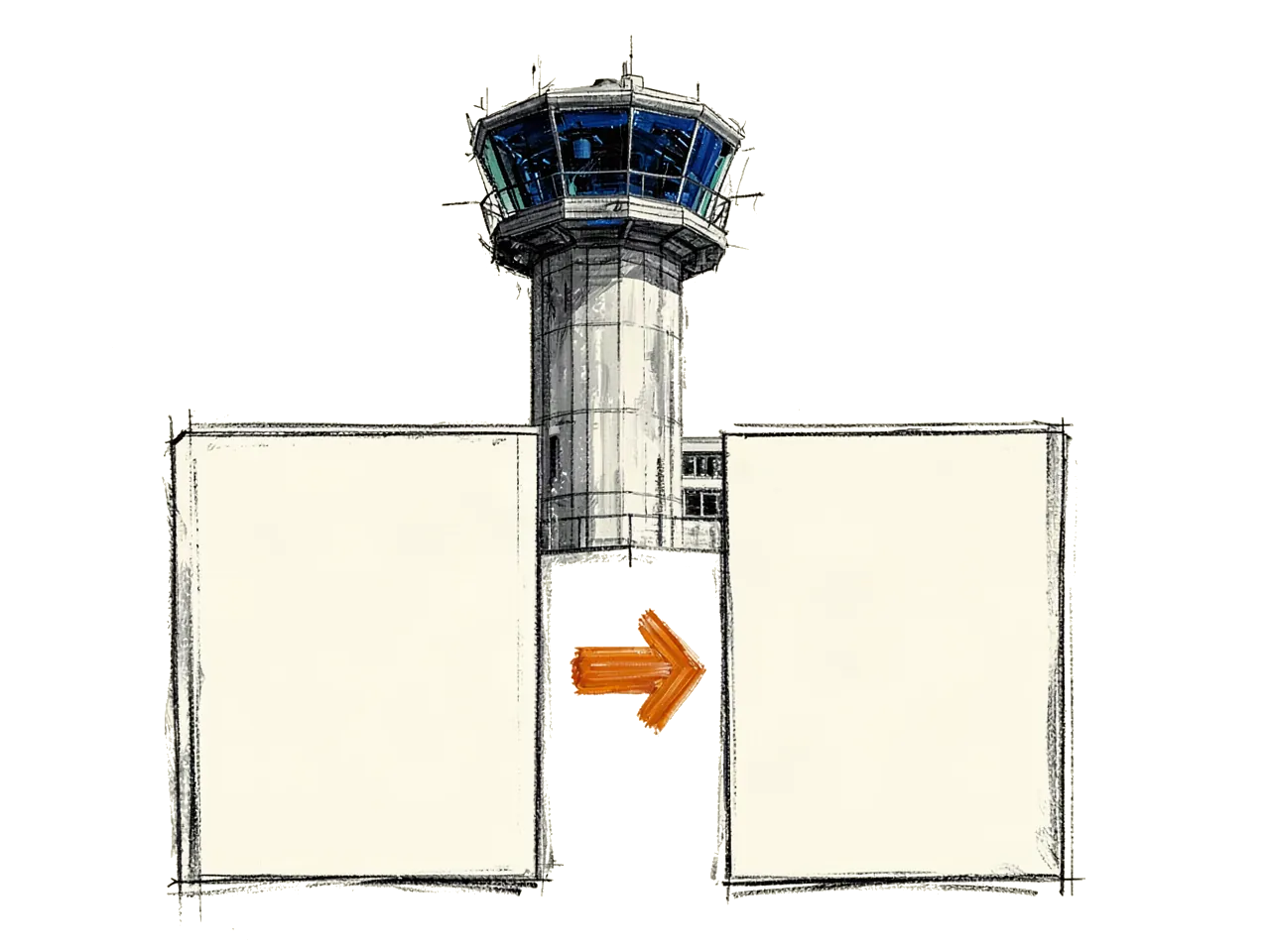
Tanzanian ATO
   |
   | PPL(A) training and tests
   | 35 or 40 hour legal minimum
   v
Tanzanian PPL(A)
   |
   | More flying in Tanzania
   | At least 100 pilot hours in total
   v
German competent authority
   |
   | Article 9 checks
   v
Part-FCL PPL(A)
The German competent authority verifies the application and decides whether to issue the licence.
What Germany requires later
Article 9 of Commission Delegated Regulation (EU) 2020/723 permits a Member State authority to convert an equivalent third-country ICAO licence into a Part-FCL PPL with a single-pilot class or type rating. For the Tanzanian PPL(A) route I am considering, the requirements are:
- Hold a current, valid ICAO Annex 1-compliant PPL(A) that the authority accepts as equivalent. The licence must not be revoked or suspended.
- Have at least 100 hours of flight time as a pilot.
- Pass a written examination in Air Law and Human Performance. Article 9 names these two written conversion subjects.
- Pass the Part-FCL PPL skill test. The relevant procedures and manoeuvres are demonstrated as pilot in command, with flight instruction on the same class or type used for the test.
- Fulfil the Part-FCL Subpart H requirements for the relevant class or type rating.
- Hold the required medical issued under Part-MED. For PPL privileges this is at least a valid Class 2 medical, not only the Tanzanian ICAO medical.
- Demonstrate language proficiency under FCL.055. For radiotelephony this means at least Operational Level 4 in English or the language used for the flight's radio communications.
Conversion is different from validation. Conversion produces a Part-FCL licence. Validation temporarily recognises the third-country licence, normally for no more than one year while it remains valid. I am looking at conversion because it is the durable route. I did not verify a special Germany and Tanzania bilateral shortcut, a current German fee or a Tanzania-specific application checklist.
The microlight result is much less generous. A Tanzanian PPL(M) does not convert into an EASA PPL(A) or LAPL(A). German ultralights sit in a national licensing system outside Part-FCL, and the DULV handles the recognition process.
Under the published DULV procedure for a non-European microlight licence, the applicant needs a DULV-approved school for the same UL category, the full written examination in all subjects including radiotelephony, the full practical course and an external examiner. For a three-axis microlight, the published flight course is 30 hours. The procedure does not credit the foreign microlight hours against that statutory course. It also calls for an EASA-compliant medical of at least LAPL standard.
PPL(M) can be a valid way to fly microlights in Tanzania, but it is not a shortcut to a German aeroplane licence. It does not even provide a short published route to the German UL licence. This is the main regulatory reason I chose PPL(A).
The small study app I built

While working through the rules, I built a small English study app for the nine TCAA PPL(A) knowledge areas. It is live at eminogrande.github.io/flugschein-training. The public GitHub repository contains the app, tests and documentation, without the research notes or email history. The first public release is v0.1.0.
The bank has 90 original syllabus-style questions, ten for each subject. The subjects are Air Law, Aircraft General Knowledge, Flight Performance, Planning and Loading, Human Performance, Meteorology, Navigation, Operational Procedures, Radiotelephony and Principles of Flight.
Each question has four options, one answer, an explanation and a source reference. These are not authentic TCAA exam questions, leaked papers or memorised exam items. They were written against the cited regulations and textbooks.
The quiz offers subject filters and rounds of 10, 25 or all questions. It can shuffle the order, gives immediate feedback and ends with a review of misses. The flashcards use the same bank. The card shows the question first, then the answer and explanation. The Again or Know button sets the next review.
The card scheduler is a five-box Leitner system with gaps of 0, 1, 3, 7 and 16 days. Again sends a card back to box 1 and brings it back in the same session. Know promotes it by one box. The schedule stays in that browser's local storage. There is no account or sync.
The app is plain HTML, CSS and JavaScript. It has no backend, no build step and no network calls. It works from local files as well as GitHub Pages. GitHub Actions runs the schema, scheduling and headless Chrome tests on Ubuntu, and the release test run passed. A separate Pages workflow publishes the static files from main.
Ninety questions are enough to start retrieving the material. They are not enough to prepare for the real exams alone. Ten questions cannot cover a whole PPL subject. After several rounds the wording becomes familiar, which is not the same as understanding the topic.
The real TCAA item count, exam format and pass mark are not verified in the app. Its 75 percent results band is a study marker, not a confirmed TCAA threshold. The explanations have not been reviewed by a flight instructor either. The app is a drill, not the syllabus and not ground school.
A practical way to study

I put a simple study plan in the repository. It uses roughly 45 minutes a day, six days a week, for eight to ten weeks before the exams, adjusted to the school's timetable. The important part is the order, not the exact calendar.
- Read the current syllabus and textbook first. Use the app after studying a topic, not as the first explanation of it.
- Spend about 10 minutes a day on the cards that are due. Say the answer before flipping. If the answer was a lucky guess, choose Again.
- On Monday, Wednesday and Friday, study one subject and then do its 10-question quiz. On Tuesday and Thursday, keep a second subject warm with another quiz.
- On Saturday, do a 40-minute mixed session across all subjects. Mixed order helps diagnose weak areas, but it does not replace learning one subject properly.
- Read the explanation for every miss and write the miss on paper with the source page. Sunday can be rest, or 10 minutes on the weakest subject's cards.
- Add questions when a textbook chapter is not covered. Around 30 original questions per subject is a more useful working target for this app, not an official TCAA number.
A high score on the same 90 questions only proves that the bank has become familiar. The check that matters is whether I can answer a new question from the underlying rule or concept. That is why the source references and written miss log matter more than the score animation.
What is still pending
At my latest read-only Gmail check on 28 October, TPTC had replied with general student pilot information. Its message gives the typical 45 to 65 hours and 4 to 8 months already mentioned. It names 9 February 2027 as the next planned PPL intake and says the attached rates are indicative and under review. It does not settle a current itemised price or guarantee an intensive schedule for my wife, my friend and me.
I found no new reply from ZRP, NIT, FZTC, FTC or Airplanes Africa in the searches of their known sender addresses in All Mail and Spam. ZRP's January reply remains an offer of the light-sport course without a priced follow-up. Nobody should read the public prices in the table as an accepted group quote.
Two ATO renewal checks also remain open. The TCAA record for ZRP displayed an expiry of 31 August 2026. The FTC record displayed 30 October 2026. Before paying, I need current renewal evidence and written confirmation that the exact course, aircraft category and training base are inside the school's approval. The other three checked pilot-school records showed expiry dates in 2027, but their current course capacity still needs confirmation too.
Right now I have the research and a small study app. I do not have an enrolment, a booking or any flight training to report. The next comparison is simple. Get the written all-in quotes, check the ATO status and required documents, then rank the schools by a realistic completion date for all three before comparing cost. A cheap hourly rate with no aircraft schedule is not a course.
Rules and prices can change. Confirm the current position with TCAA, the German competent authority, DULV and the school before paying or flying.