The potential of gravitational waves in solving the black hole information paradox
TL;DR: The black hole information paradox comes from quantum mechanics and general relativity clashing at black holes. The idea here is that gravitational waves sent out by infalling matter could encode its quantum state and carry the information out. Two hypothetical formulas sketch it, one as an extra term on Hawking's entropy formula. Testing it needs more sensitive detectors, LISA in space and black hole analogs.
The black hole information paradox is an old problem in theoretical physics. It comes from a clash between quantum mechanics and general relativity when you apply both to black holes. But now that we can detect gravitational waves, there are new ways to look at it. In this post we propose that the information about the state of matter falling into a black hole could be kept and carried away by the gravitational waves that come out while it falls.
The paradox and the idea
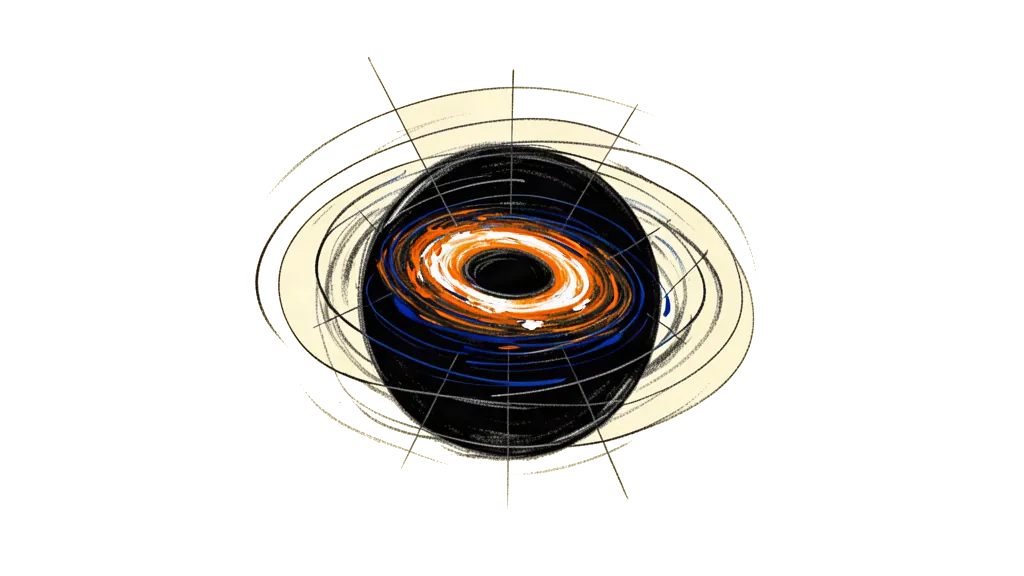
Quantum mechanics says information can't be lost. But when matter falls into a black hole, it looks like it is gone forever, because nothing can come back from beyond the event horizon. That is the information paradox, and it goes right to the basic laws of physics.
Our idea is that gravitational waves, the ripples in spacetime, could be the thing that keeps the information about the infalling matter and carries it out. When matter gets close to the event horizon, it goes through extreme gravity and that makes it send out gravitational waves. These waves could encode the quantum state of the infalling matter, and so the information would get out of the black hole.
A framework and how to test it
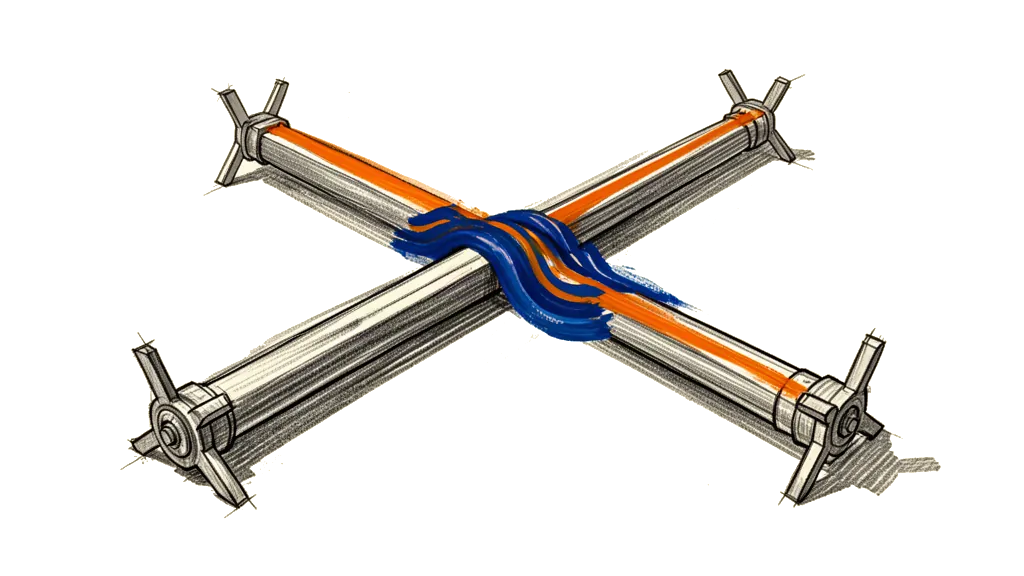
To back this up we propose a theoretical framework that puts together quantum mechanics, general relativity and information theory. With these three we can build mathematical models of how the quantum state of matter could be printed onto gravitational waves while it falls in. Those models would be the base for more research and for tests.
And there are a few ways to test it. One is better gravitational wave detectors. If the detectors we have now, like LIGO and Virgo, get more sensitive, they could pick up the gravitational waves sent out while matter falls into black holes. Two is space based interferometers. A detector in space like LISA (Laser Interferometer Space Antenna) could see low frequency gravitational waves, and those are more likely to carry information about the infalling matter. Three is black hole analogs. Systems that act like black holes, like Bose-Einstein condensates or acoustic black holes, would give us a controlled place to study how information gets encoded onto gravitational waves.
What it would change
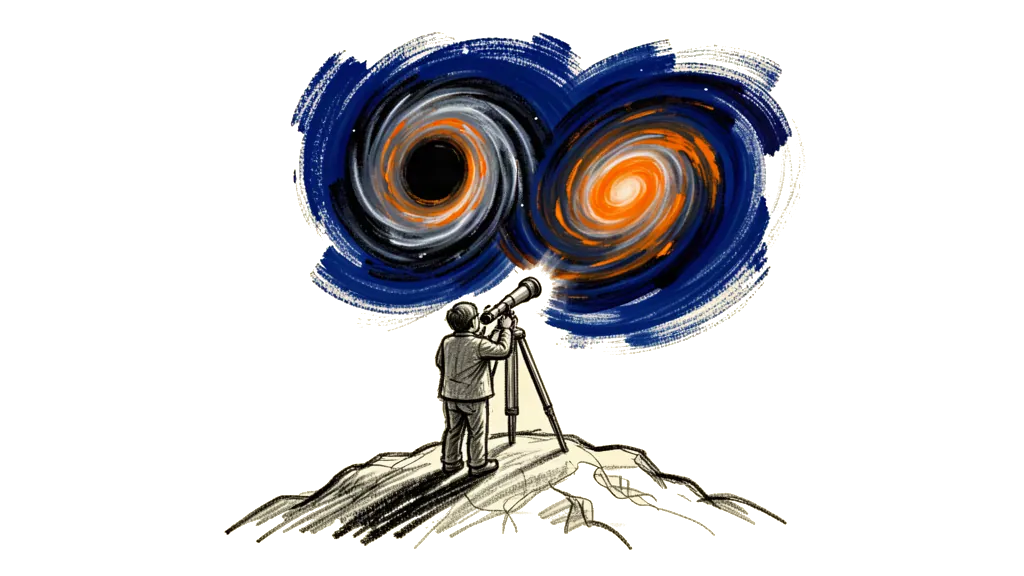
If this idea turns out to be right, it changes a lot about how we understand black holes, quantum mechanics and what information is in our universe. It would solve the old information paradox and open new research in theoretical physics.
To go further, theoretical physicists, experimental physicists and people who know information theory have to work together. And it needs money and support from science institutions and governments to build better gravitational wave detectors and run big experiments.
So the idea is simple. Gravitational waves could carry the information about the state of matter that falls into black holes, and that would be a way out of the information paradox. If we put quantum mechanics, general relativity and information theory together, we can build a framework for it. To prove it we need better gravitational wave detectors, interferometers in space and analog systems. If it holds, it would change how we understand black holes and what information really is.
A first hypothetical formula
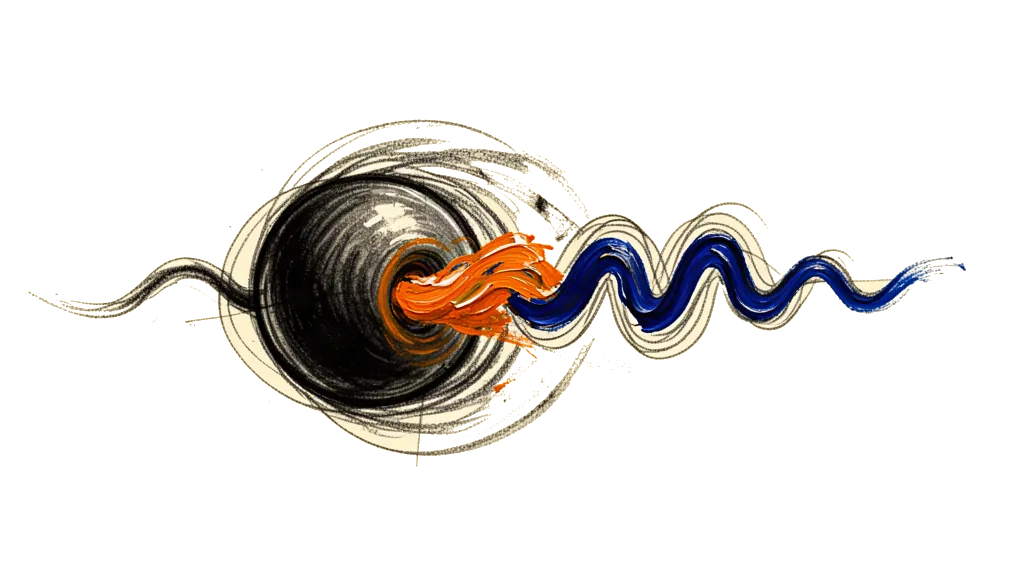
And more after digging. Here is a hypothetical formula for the idea that gravitational waves carry the information about the state of matter falling into a black hole. I go through each part and what it means.
The proposed formula is this.
I_BH = ∫ Ψ_GW(t) dt
I_BH is the information content of the black hole. Ψ_GW(t) is the wave function of the gravitational waves sent out while the matter falls in, as a function of time (t). And ∫ is the integral over time.
I_BH is the total information content of the black hole. In this idea the information is not lost, it is kept and carried by the gravitational waves sent out while the matter falls in.
Ψ_GW(t) is the wave function of those gravitational waves. A wave function is a complex valued function that describes the quantum state, here the quantum state of the gravitational waves. It depends on time (t) because the falling in is a process that changes all the time.
The integral ∫ adds up the wave function over time. So it counts all the information the gravitational waves carry during the whole time the matter falls in.
So the formula says the information content of the black hole (I_BH) equals the integral of the wave function of the gravitational waves (Ψ_GW(t)) over time. That means the information about the state of the infalling matter is encoded in the gravitational waves, and you can get it back by looking at the wave function.
To build this out we would need more variables and parameters, like the initial state of the infalling matter (Ψ_IM), the gravitational field strength (G), the mass of the black hole (M_BH) and the radius of the event horizon (R_EH).
With these we could describe how the infalling matter, the gravitational field and the gravitational waves that come out are connected. The exact form of the wave function (Ψ_GW(t)) would come from the equations of quantum mechanics and general relativity, with the extreme gravity near the event horizon in mind.
This formula is only a hypothetical way to write down the idea. It needs real mathematical work and tests. If it is ever proven, the real formula would most likely be a lot more complex and have more variables to fully describe how information gets encoded in gravitational waves.
But it's a starting point for more theory and more experiments on whether gravitational waves can solve the black hole information paradox.
Extending Hawking's entropy formula
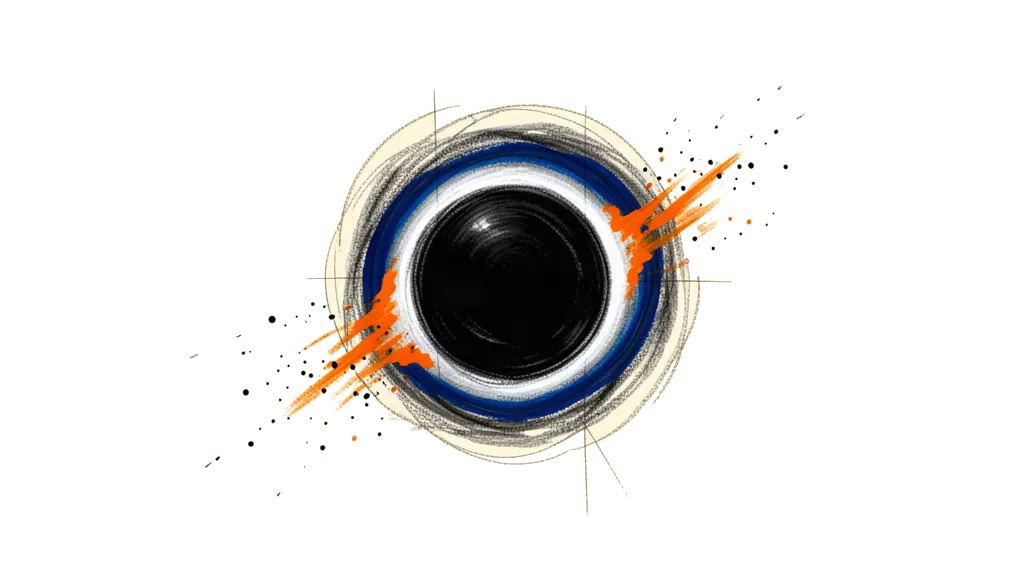
And finally more.
Let's bring in Stephen Hawking's work on the information paradox and add gravitational waves as a possible solution. Hawking proposed that black holes send out radiation, called Hawking radiation, and because of it black holes evaporate over time. The formula for Hawking radiation builds on the idea of black hole entropy.
Hawking's formula for black hole entropy is this.
S_BH = (k_B × A_EH) / (4 × l_P^2)
S_BH is the entropy of the black hole, k_B is the Boltzmann constant, A_EH is the area of the event horizon and l_P is the Planck length.
To extend Hawking's formula with the idea that gravitational waves carry information, we can change it like this.
The modified formula is this.
S_BH = (k_B × A_EH) / (4 × l_P^2) + ∫ I_GW(t) dt
Here S_BH is the total entropy of the black hole, k_B is the Boltzmann constant, A_EH is the area of the event horizon, l_P is the Planck length, I_GW(t) is the information carried by the gravitational waves as a function of time (t), and ∫ is the integral over time.
In this modified formula we add one more term, ∫ I_GW(t) dt. It stands for the information carried by the gravitational waves sent out while matter falls into the black hole. We integrate it over time so it counts all the information during the whole process.
The original part, (k_B × A_EH) / (4 × l_P^2), is the entropy of the black hole as Hawking described it. It connects the entropy with the area of the event horizon (A_EH) and with basic constants like the Boltzmann constant (k_B) and the Planck length (l_P).
When we add ∫ I_GW(t) dt to Hawking's formula, we say the total entropy of the black hole is not only set by the area of its event horizon. It also includes the information the gravitational waves carry. And that would mean you can solve the information paradox if you look at how gravitational waves keep and carry the information of the infalling matter.
This modified formula is also only a hypothetical extension of Hawking's work. It needs more theory and real tests. The exact form of I_GW(t) and how it connects to the black hole and the infalling matter would have to come from quantum mechanics and general relativity.
But it gives us a simple frame to bring gravitational waves into the talk about the black hole information paradox, and it builds on the big work Stephen Hawking did in this field.