Bread is in the lion's mouth
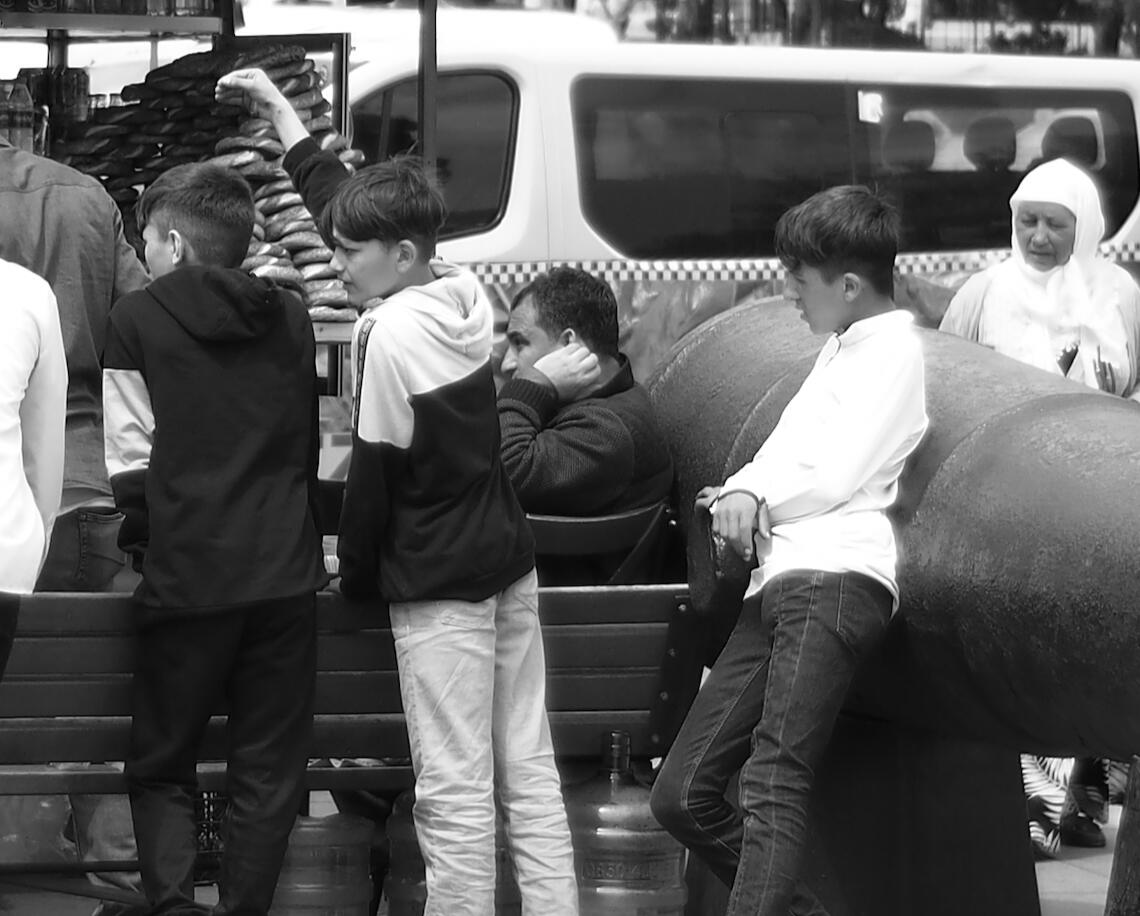
TL;DR: A long lens from across the square presses boys, a seated man, a woman in white and a van into one flat frieze around a bread cart. No shadow edges, a sharp fist and a 5:4 crop read as cloud, about 1/500 s and a long lens, all estimates since no camera data exists. One raised fist, one hand at an ear and three whites on a slant carry the frame, and a blown white shirt is its one fixable mistake.
The title is a Turkish proverb, Ekmek aslanın ağzında.
Four people, four elsewheres
Look at the hands first. One is a fist at the top of a pole of bread. One is pressed flat against an ear. A pair rests clasped at a hip and one holds something small at a chest. No two people do the same thing and nobody looks at anyone else, though everybody in this frame stands close enough to touch.
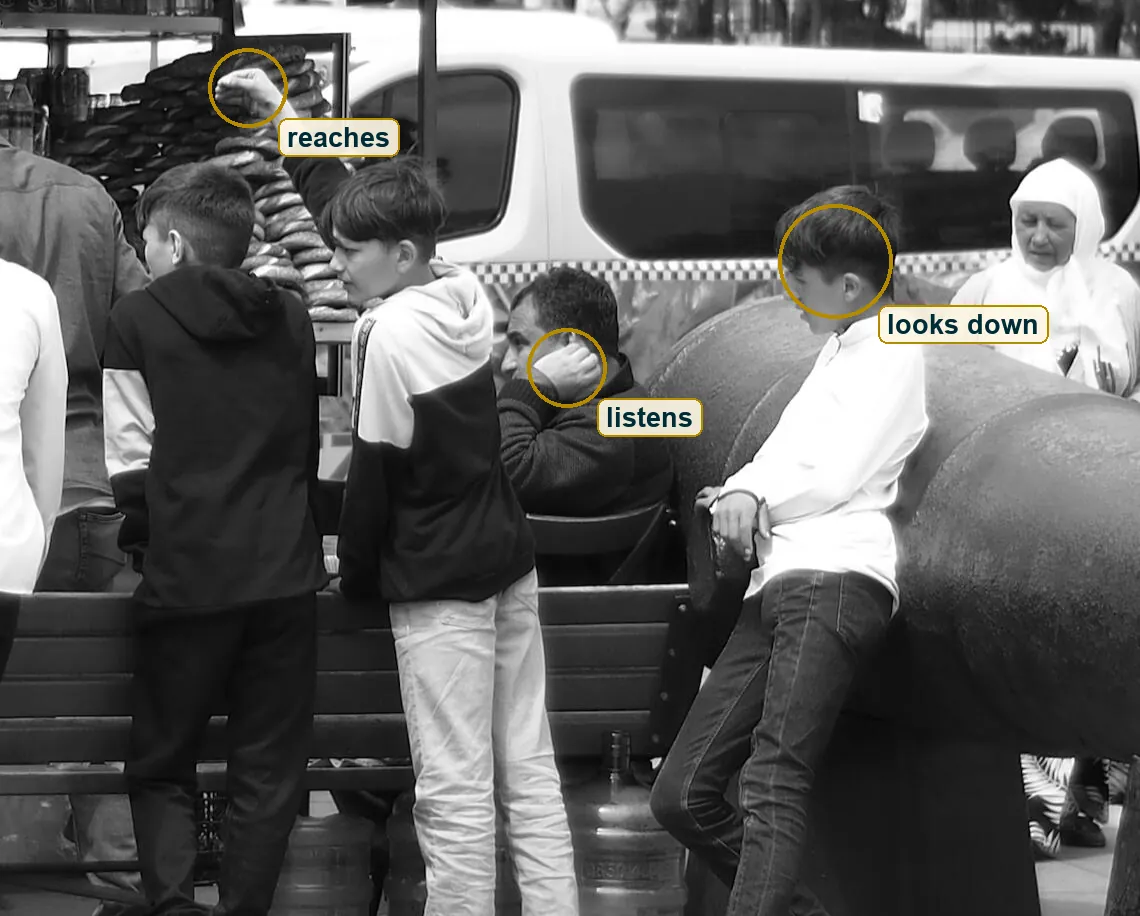
"Out of sight, out of mind" is the English equivalent recorded for Gözden uzak olan gönülden de uzak olur. Here the twist is that people can be close in space and still outside one another's attention.
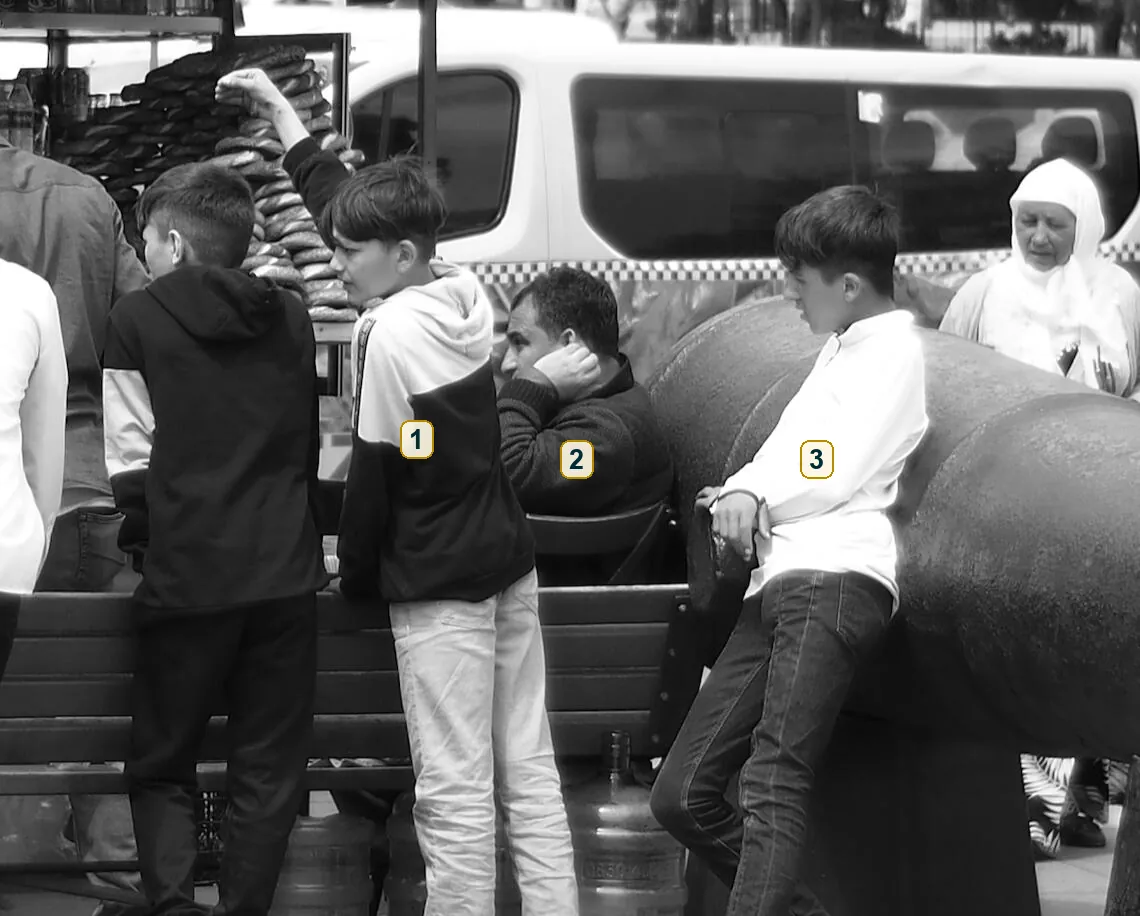
It's a black-and-white street frame from Emin Mahrt's old photo site, and the date and the place are not given. Two boys in hoodies stand at a simit cart. A man in a knit sweater sits behind a slatted bench. A third boy in a white shirt leans back on a big dark rounded form, cast metal or stone, maybe part of a statue, and you can't tell more from the frame. An older woman in a white headscarf stands at the right edge, and a white van with a checkered stripe fills the whole top of the picture. The cart and the stripe read as Turkey, and that is as far as the picture lets you go. There is no camera data either, so every number below is read from the pixels and from what the light and the lines allow.
Bread on a pole
Before the people, look at the thing they came for. The simit is a ring of bread crusted with sesame, and on this cart dozens of them are stacked into one tall column up to the top shelf, with bottles and jars beside it. Street sellers in Turkey sell it from a trolley like this one or from a tray carried on the head, and Wikipedia calls it an important symbol for lower and middle class people in Turkey. It's the cheapest thing in the frame and it sits in the top left corner, the spot where a left to right reader enters.
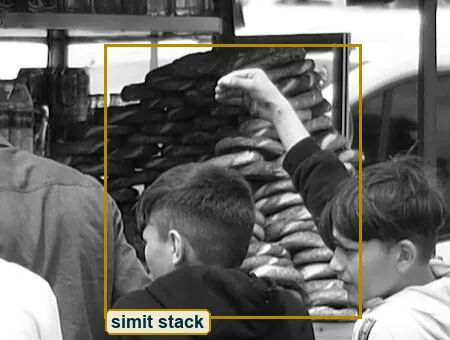
In grey the bread turns into pattern. Without the golden brown you'd see in colour, the rings only work as shape, dark loops with small bright points where the sesame catches the sky. That texture is the only thing that tells you it is bread at all. It also gives the frame its one busy corner, and against that busy corner the van windows and the dark jeans read as calm.
One fist at the top
There is exactly one action in this picture. An arm rises out of the crowd to a closed fist at the top of the simit stack. Follow it down and the bare forearm turns into a dark sleeve, runs down to the right in front of the bread and disappears behind the head of the boy in the two-tone hoodie.
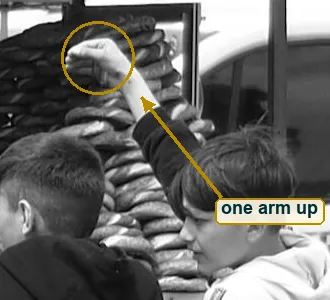
So it's most likely his arm. The other boy has light sleeves at the forearm and his shoulder has no arm rising from it. The joint itself is hidden behind hair, though, so this stays a reading and not a fact. "Barking dogs seldom bite" is the English equivalent of the Turkish saying Havlayan köpek ısırmaz. A fist can look louder than the action it belongs to. A closed fist is odd for someone who wants a simit, because you take bread with an open hand. Maybe he stretches, maybe he jokes, maybe he knocks on the shelf. The picture doesn't say and it is better for that. Take the arm away and you have a waiting room. Leave it in and you have one small want at the top of a frame full of people who want nothing from this corner.
The man who listens
The seated man has his hand pressed to the side of his head and his face turned left. No phone is visible. It could be a call, it could be someone shutting out the street, it could be an itch.
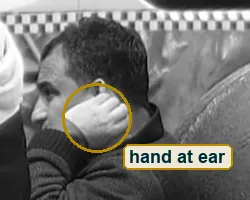
Orhan Veli's poem I Am Listening to Istanbul builds a whole city out of sound, the bells of the water carriers, birds, hammers at the docks and the Grand Bazaar. Its returning refrain keeps bringing the listener back to the city. The place here isn't named and nobody should pretend it is his city. But the poem shows you what a photograph can't do. A picture has no sound at all, and this hand is the one point in the frame where you start to hear things anyway. The seller's call, the van engine, the boys talking. You supply all of it, because one man is listening.
A frieze, not a street
Most street pictures use depth, a road running away from you or a door opening behind someone. This one has none of that. No horizon, no lines that meet. The frame is built from bands stacked on top of each other, the van roof, the checkered stripe, the dark windows, a row of heads, the bench rail, the slats, the water carboys on the ground.
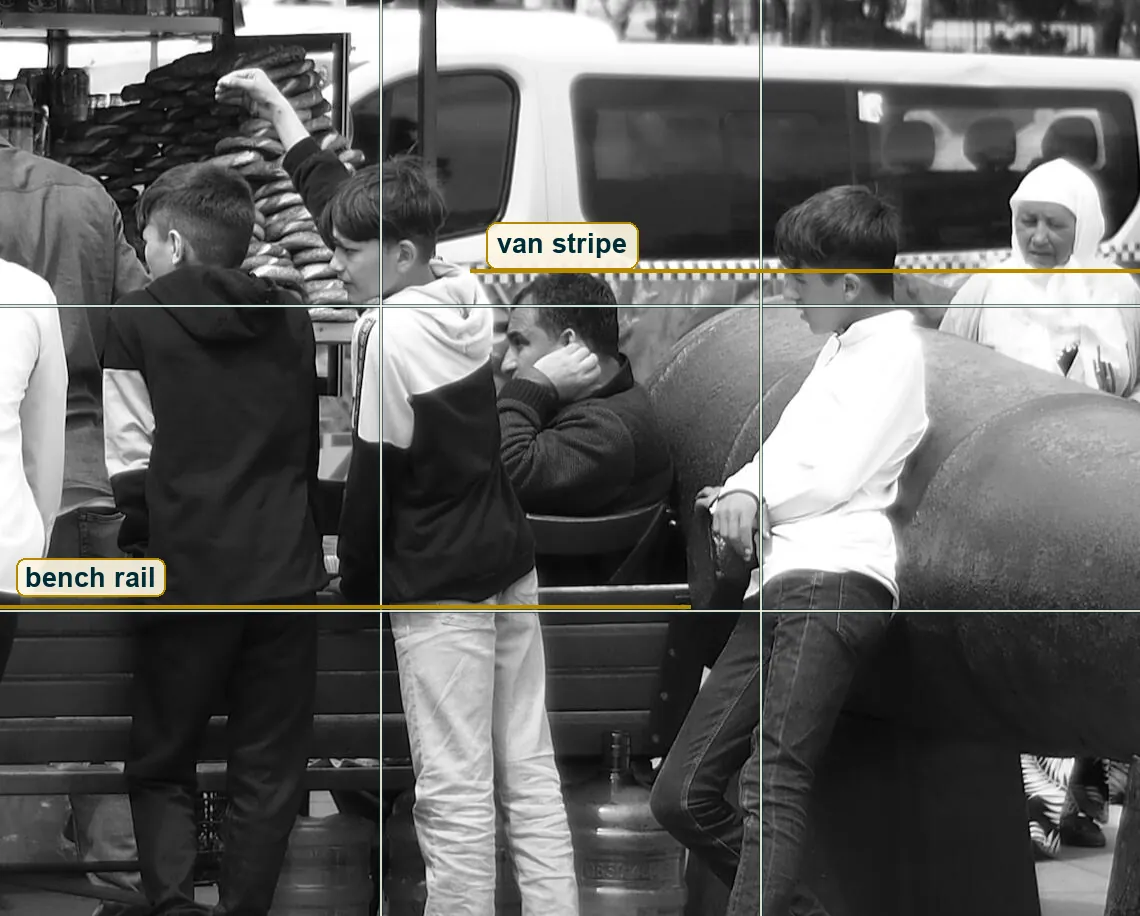
Put a thirds grid on it and the build shows. The bench rail sits almost exactly on the lower third. The van stripe runs just above the upper third, right at head height. The boy in profile stands on the left vertical and the leaning boy's shoulder sits on the right one, with the seated man in between. It reads like a carved frieze, figures side by side at about the same size, nobody walking into the picture. Then look at the edges. On the left a white sleeve and a man in a grey shirt are cut off. On the right the woman and the dark form are cut. At the bottom every leg stops before the shoe. John Szarkowski put the photographer's whole problem as a question, "what shall he include, what shall he reject?" Here the answer was to cut people on three sides and the cart and van at the top, so the street keeps going past the frame.
Three whites on a slant
In black and white you compose with tone, not with colour, and the three loudest tones here are whites. The hood of the boy in profile, the shirt of the leaning boy and the headscarf of the woman. Join them and you get a line that runs right and then climbs, the one slant in a frame made of level bands.
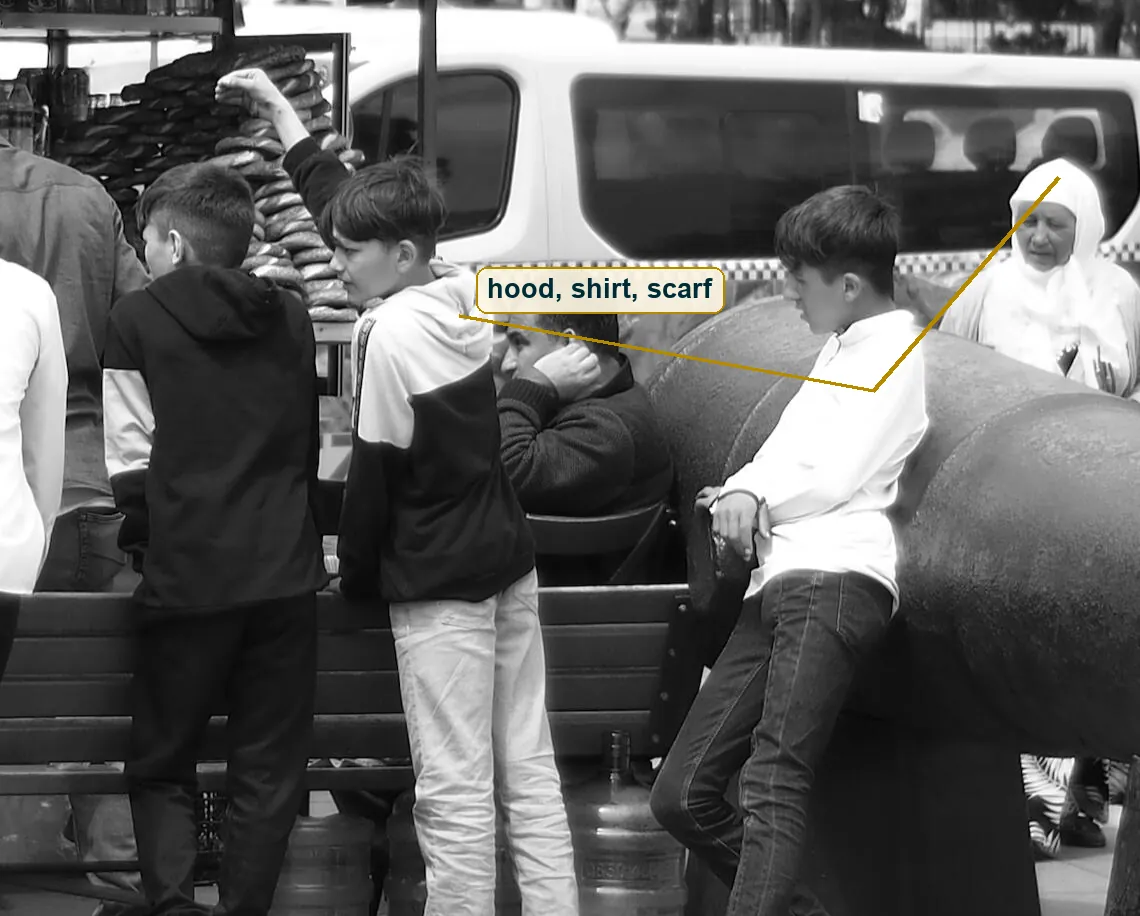
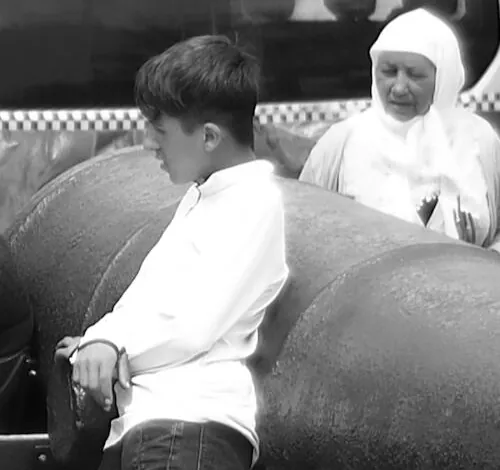
The file backs this up. Its red, green and blue channels are identical, so it is a true greyscale image. Half of all pixels sit in the darkest quarter of the scale, from the van windows, the jeans and the knit sweater, and a bit under six percent sit at pure white or right next to it. So the frame is mostly dark with a few bright notes, and the bright notes are those three pieces of cloth plus the van. In colour that would fall apart. The van would compete with a red jacket, the scarf with some green on the cart, and the eye would jump around. In grey nothing competes, and the whites lead you from the boys at the cart to the woman who is not part of their moment at all.
Light under a lid of cloud
There are no hard shadows anywhere. No face has a bright half and a dark half, nobody throws a shape across the ground. The tops of the heads and the shoulders are lighter and the undersides of the bench and the carboys are darker, which is what light from above looks like when it is soft.
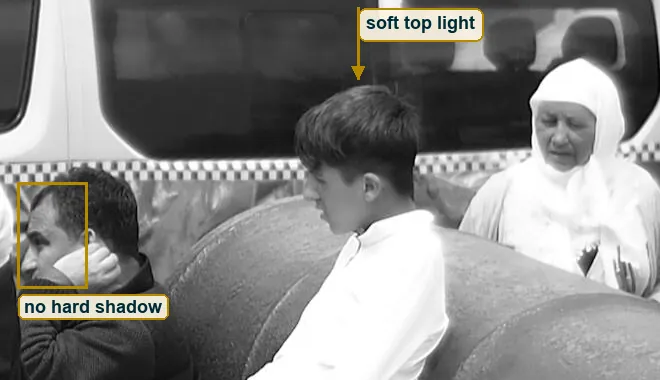
The old Sunny 16 table gives a way to read this. Full sun with sharp shadows is about f/16 at one over your ISO. Overcast with barely visible shadows is f/8. Heavy overcast or open shade with no shadows at all is f/5.6 or f/4. This frame looks like the bottom of that table, so roughly two to three stops less light than direct sun, from a grey sky or the shade of buildings around a square. The hour stays hidden, because soft light takes the direction away that would tell you. The trade is clear though. You lose drama and you get faces. Every person here is lit with the same fairness, and that fits a picture where nobody is the hero.
Reading the lens
The strongest clue is how big the woman is. She stands behind the leaning boy and behind the dark form, and her head is still not much smaller in the frame than his. That only happens when the camera is far away.
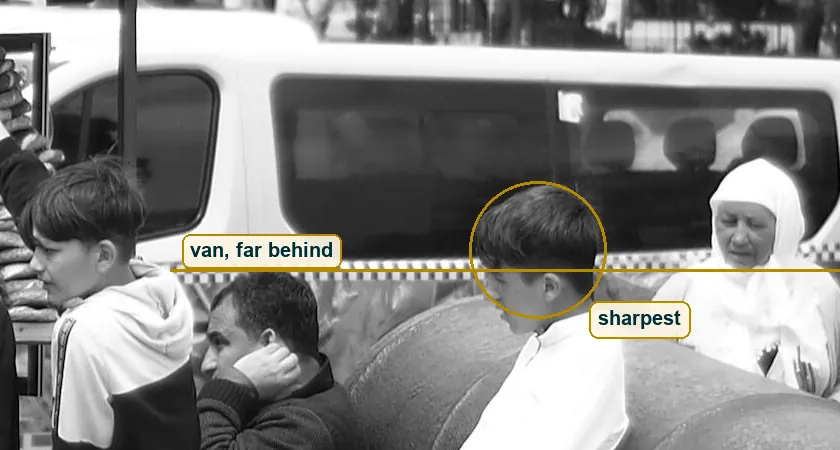
Here is the math. From nine metres, someone two metres further back looks about 18 percent smaller. From two and a half metres with a wide lens, the same two metres make them about half the size. So this was a long lens from across the square, somewhere around 100 to 200mm in full-frame terms, at maybe eight to fifteen metres. The lines agree, the bench and the van stripe run straight with no bowing, and the cart pole stands upright, so the camera was level at standing height. Focus agrees too. The leaning boy's hair is the sharpest detail in the file, and the van and the trees above it are soft. At 135mm and about nine metres, f/5.6 keeps only around 1.7 metres sharp, so a van a few metres back has to blur. One more thing, the file is 1140 by 916 pixels, close to 5:4. From a 3:2 frame that would keep about 83 percent of the width, so the real lens may have been a bit shorter and the crop did the rest. Swap to a 35mm lens from two and a half metres and you get a different picture, the van shrinks to a strip, the boys get big and they'd probably look at you. The Turkish proverb Zorla güzellik olmaz says "Forced beauty won't do." Nobody here was posed. The photographer's choice was nine metres of distance, not a direction given to the crowd.
Time inside a fist
At full size the fist holds its outline. The knuckles are a bit soft, like everything in this file, but there is no streak and no ghost of a second hand. That tells you the shutter was fast.
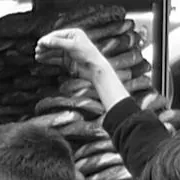
A hand moving at about a metre per second travels 2 millimetres in 1/500 s, which disappears at this size. At 1/60 s it travels about 17 millimetres, a finger's width, and the fist turns into a smear against the sesame. A long lens held by hand also needs speed for itself, the old rule is at least one over the focal length, so 1/135 s or faster and better 1/250 s. A fair reading is 1/250 to 1/500 s, f/5.6 to f/8 and ISO 200 to 800, and with the cloud reading above, 1/500 s at f/5.6 and ISO 400 fits almost exactly. The Turkish proverb Demir tavında dövülür is rendered "You should hammer your iron when it's glowing hot." Here the heat is the gesture. At about 1/500 s, the camera catches it before it goes cold. Open the aperture to f/2 instead and you'd get a faster shutter and a creamy van, but the bread would blur too and you'd lose the one texture that tells you where you are.
Film or digital
Film grain has a structure. It sits like fine sand in the middle greys, and bright areas roll off gently into white. This file shows something else.
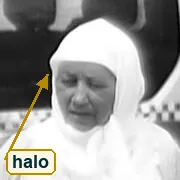
Skin, the van door and the dark form have a smooth, slightly waxy look, the way heavy noise reduction looks. Where the white scarf meets the dark window there's a thin bright rim, the halo strong sharpening leaves behind. And the whites don't roll off, they stop. Over half the pixels in the brightest part of the shirt sit at 250 or more out of 255. Together that points to a digital file converted to grey later, maybe from a long zoom or a small sensor. It's a weak case, though, because at 1140 pixels wide this is a small web export, and real grain would be hard to see anyway. On a fast black-and-white film the same scene would give you texture in the grey sky and folds in the shirt, and a bit less sharpness in the hair.
The black mood, shared
The obvious name here is Ara Güler, who photographed ordinary people in Istanbul streets and workshops in black and white for decades. He said his aim was "simply to reflect Istanbul as it really is". This frame shares his subject and his plain respect for it. It doesn't have his closeness. Güler often stood among the people he shot, and this photographer stands across the square.
The writer is Orhan Pamuk. In Istanbul, translated by Maureen Freely, he describes hüzün, a melancholy he insists is not one lonely person's mood but a whole city's. He also writes "When I watch the black-and-white crowds rushing through the darkening streets of a winter's evening, I feel a deep sense of fellowship". The link with this picture isn't the place, which you don't know. It's the grey and the crowd. Eight people share four square metres and a bread cart, nobody looks at anyone, and still the frame feels like they share one mood. That's what Pamuk means by a mood held together, and what black and white is good at.
The one mistake
The leaning boy's shirt is blown. In its brightest area more than half the pixels sit at 250 or above out of 255, and the folds are gone. That shirt is one of the three whites the whole picture leans on, and at pure white it stops being cloth and becomes a hole shaped like a boy.
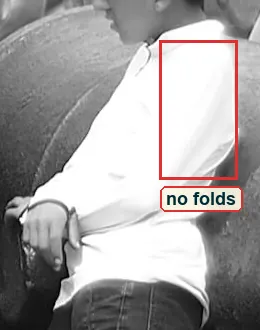
The fix is cheap. Meter on the shirt or set exposure compensation to about minus two thirds of a stop, maybe a full stop, and the faces get a bit darker but stay easy to lift later. A shirt at 255 can't be lifted. If the camera can shoot raw, keep the raw and pull the highlights down in the conversion, then set the curve so the brightest fold sits around 240 instead of 255. The scarf and the van would come back too, and the three whites would read as fabric again.
Try this
"A tree won't fall with a single blow" is the recorded English equivalent of Bir vurmakla ağaç devrilmez. A first burst is not a finished eye. Compare it, wait again, and change one thing.
Find a place where people line up side by side, a bus stop, a food cart or a bench, and stand across the street with your longest lens or your phone's tele module.
Switch to black and white on the screen so you only see tone, and move your feet until three bright things make one slant. Pull exposure down until the brightest piece of clothing still shows folds. Then wait for one gesture, a raised arm or a turned head, and shoot a short burst at 1/500 s as it starts.
The woman who looks past it all
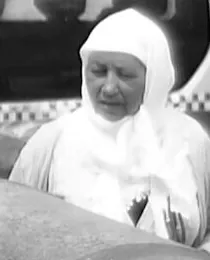
Go back to the right edge. The woman in the white headscarf looks down at something small in her hand. She isn't part of the boys' moment or the man's call. She is the last white note on the slant and the quietest person in the frame.
At the start you saw hands doing four different things. Now you know more. A long lens from across the square pressed them together, grey cloud lit them all the same, a fast shutter stopped the one fist at its top and three whites drew a path from the bread to her. And the picture still doesn't tell you what any of them want. It shows how close people stand while each one is somewhere else, and then it leaves you looking.