# One who toils in the sun eats in the shade
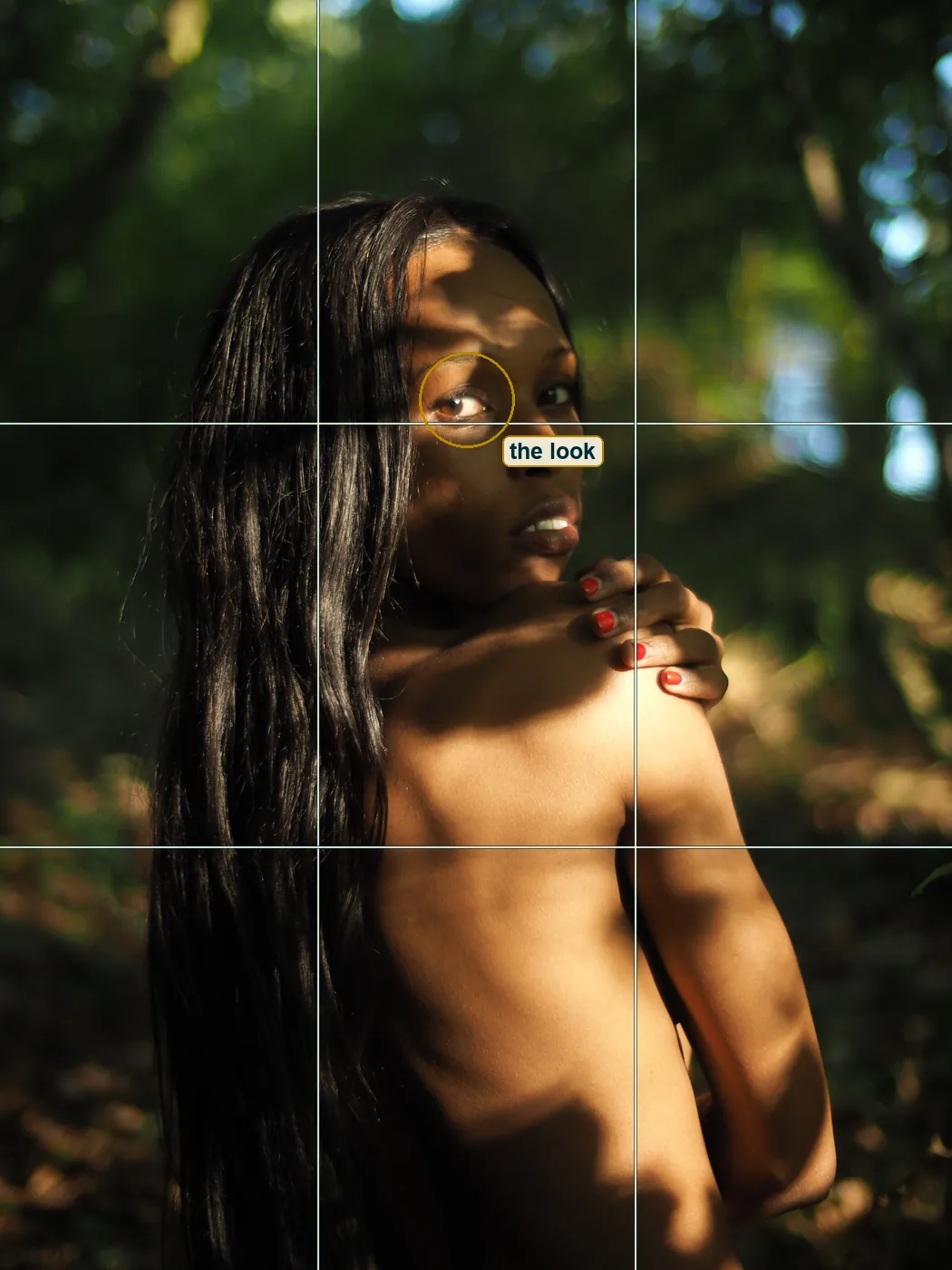
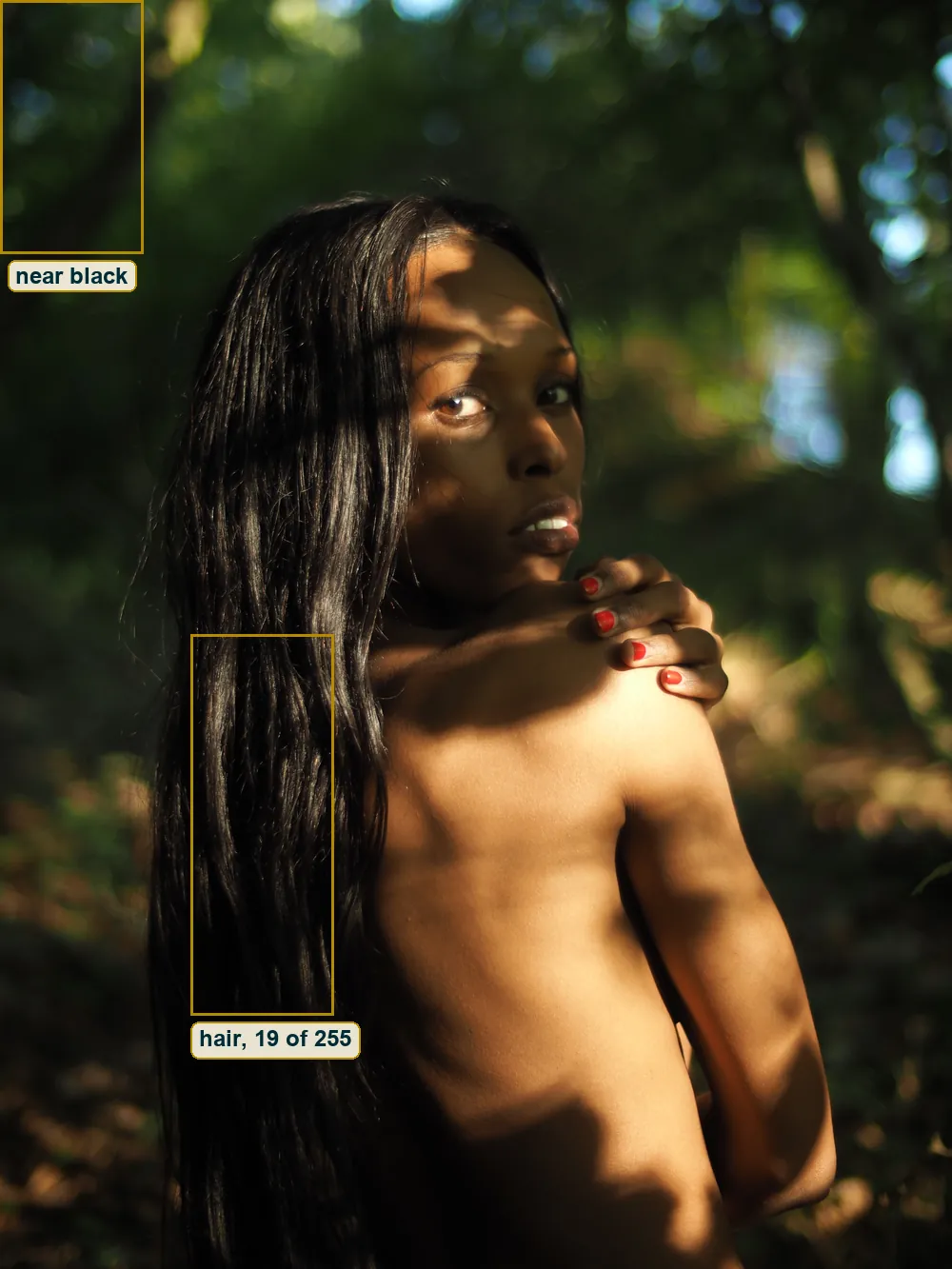
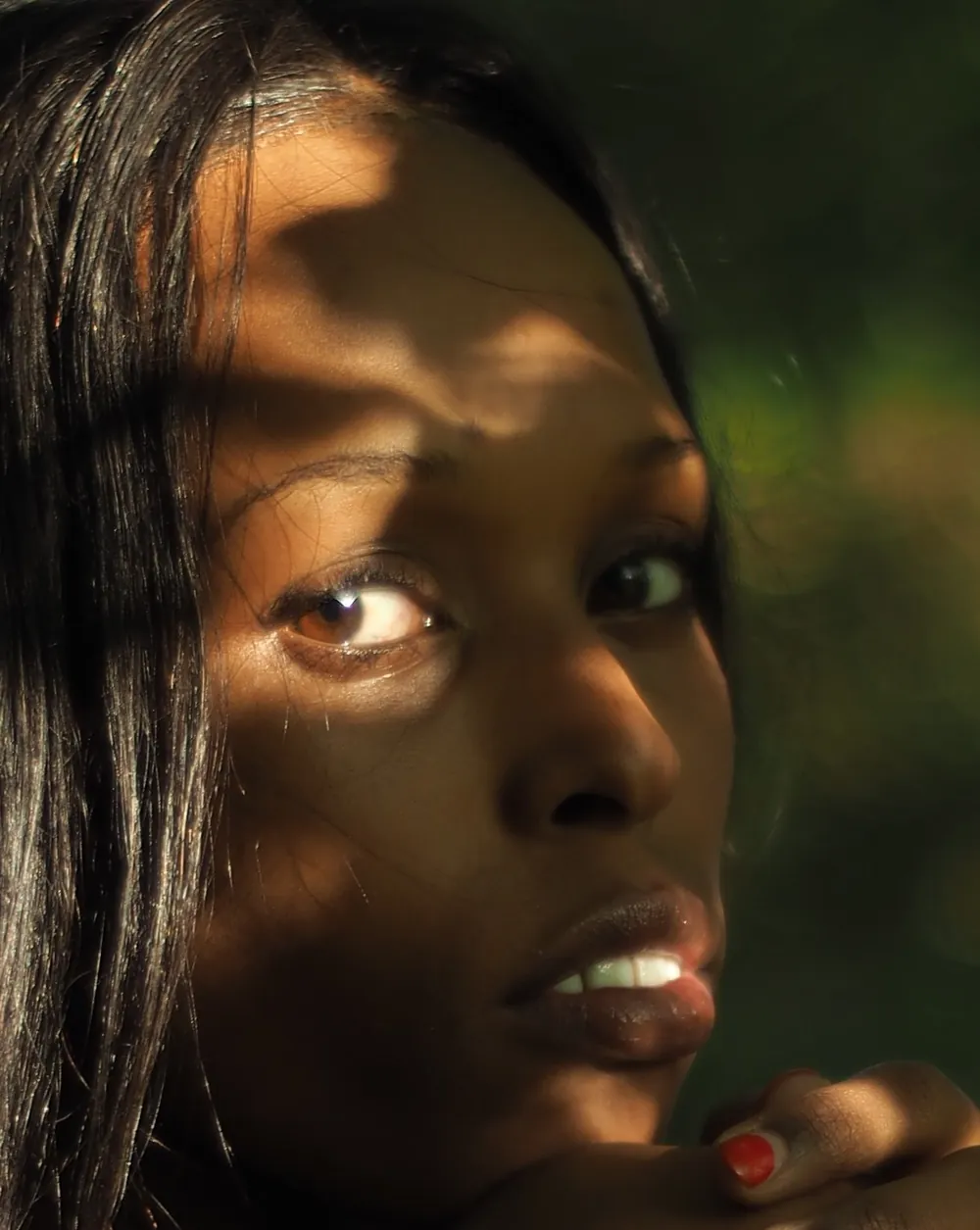
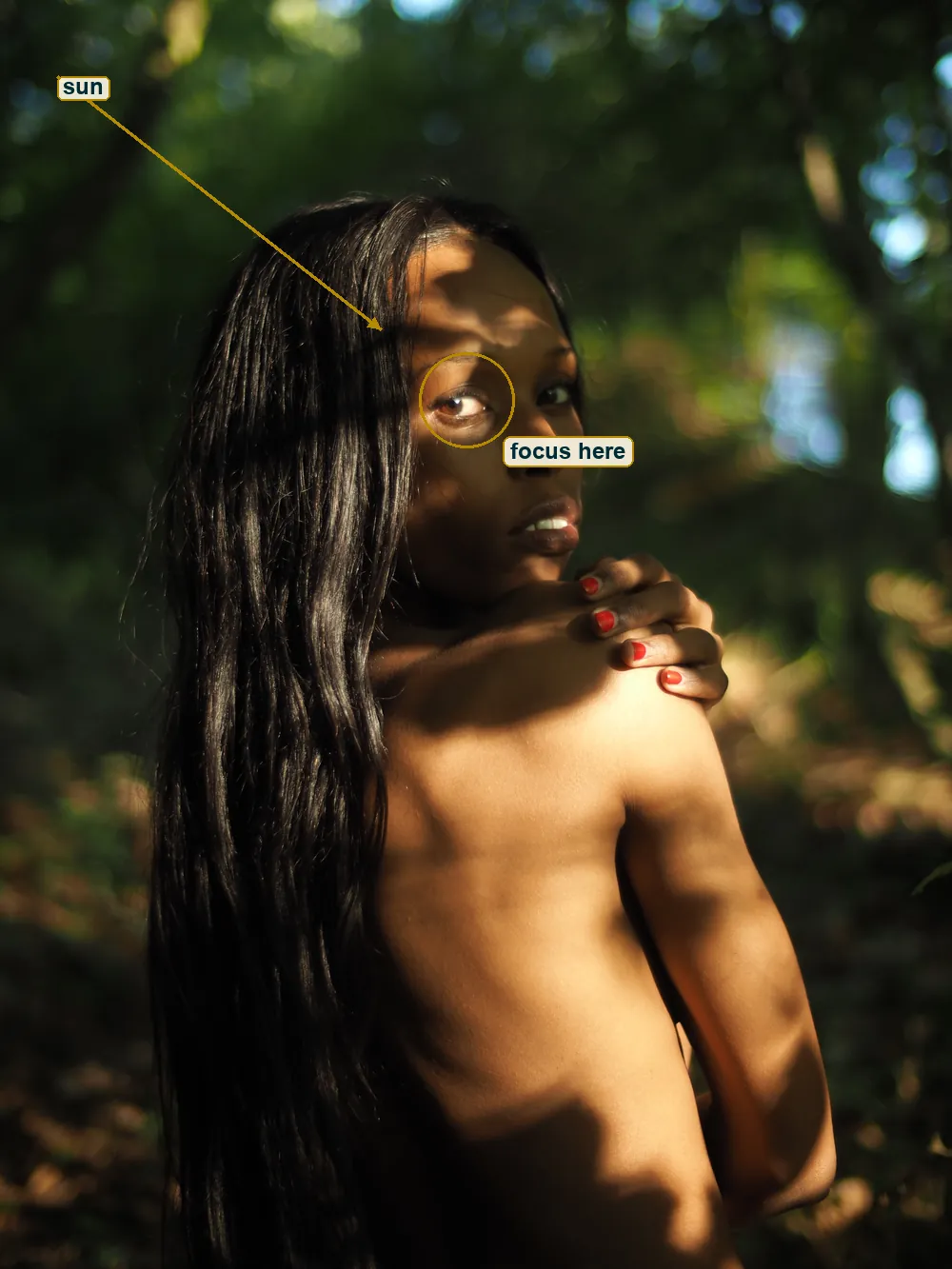
> - A woman looks back over a bare shoulder in leaf shade. One eye sits in a small patch of sun, her red nails are the only red in the frame, and half the picture is near black.
> - The real EXIF says Olympus E-M5 Mark II, manual mode, 1/320 s, ISO 100, 6000K white balance and empty lens fields. Forty minutes later the same camera shot at 1/8000 s.
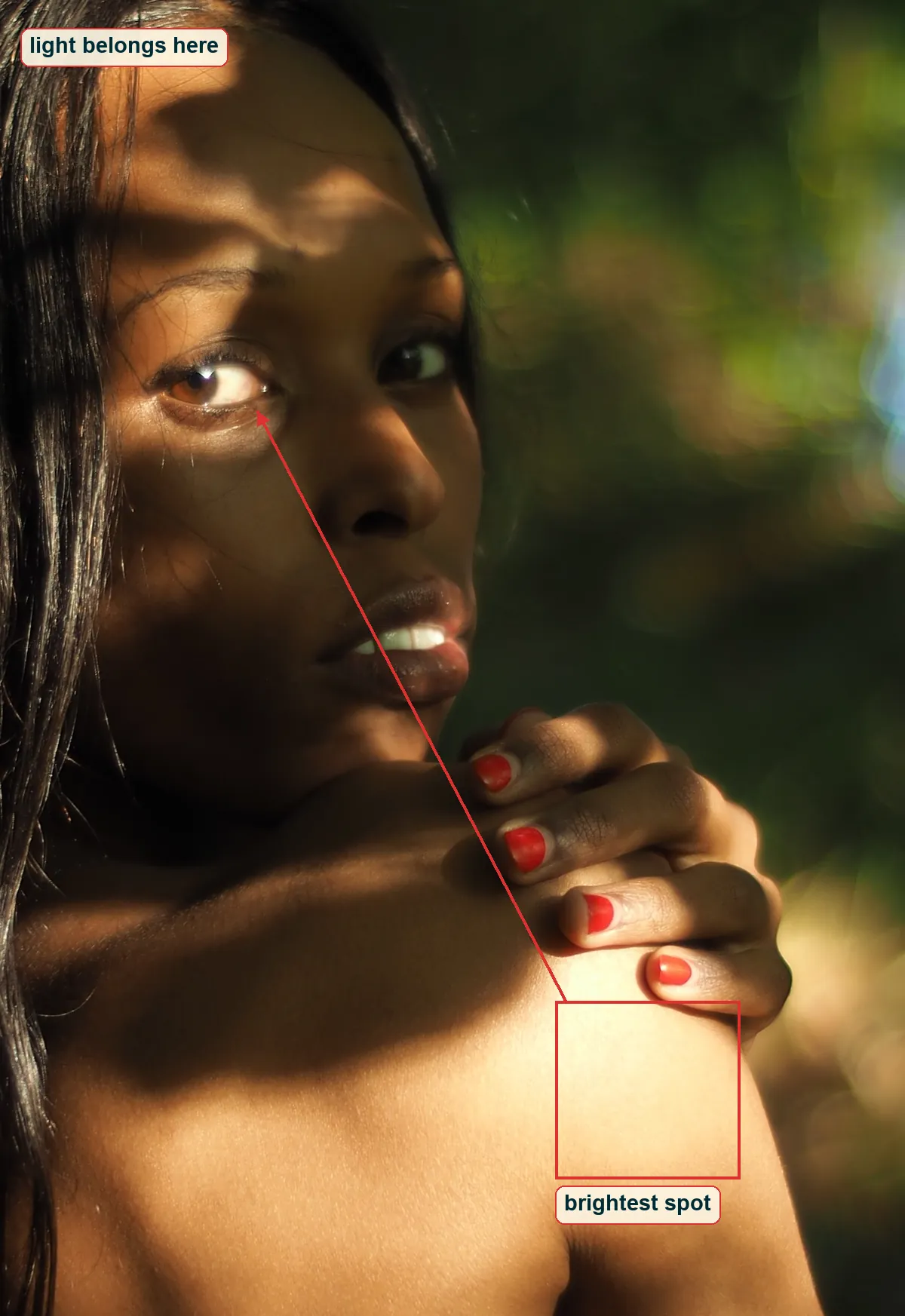
> - Measured pixels show the sunlit shoulder about 2.4 stops brighter than the lit eye. The fix is half a step so the sun lands on the face, not the shoulder.
By emin.de AI Desk. AI-written, human-supervised: not yet reviewed. Published 2026-10-18. Updated 2026-10-18.
Canonical: https://emin.de/posts/photo-dappled-shade-portrait-bare-shoulder-evening
Category: culture. Format: photo. Language: en.
Provenance: ai_generated. AI-assisted: true. Reviewed by a human: false.
The title is a Swahili proverb, Mchumia juani hulia kivulini.
## The look back
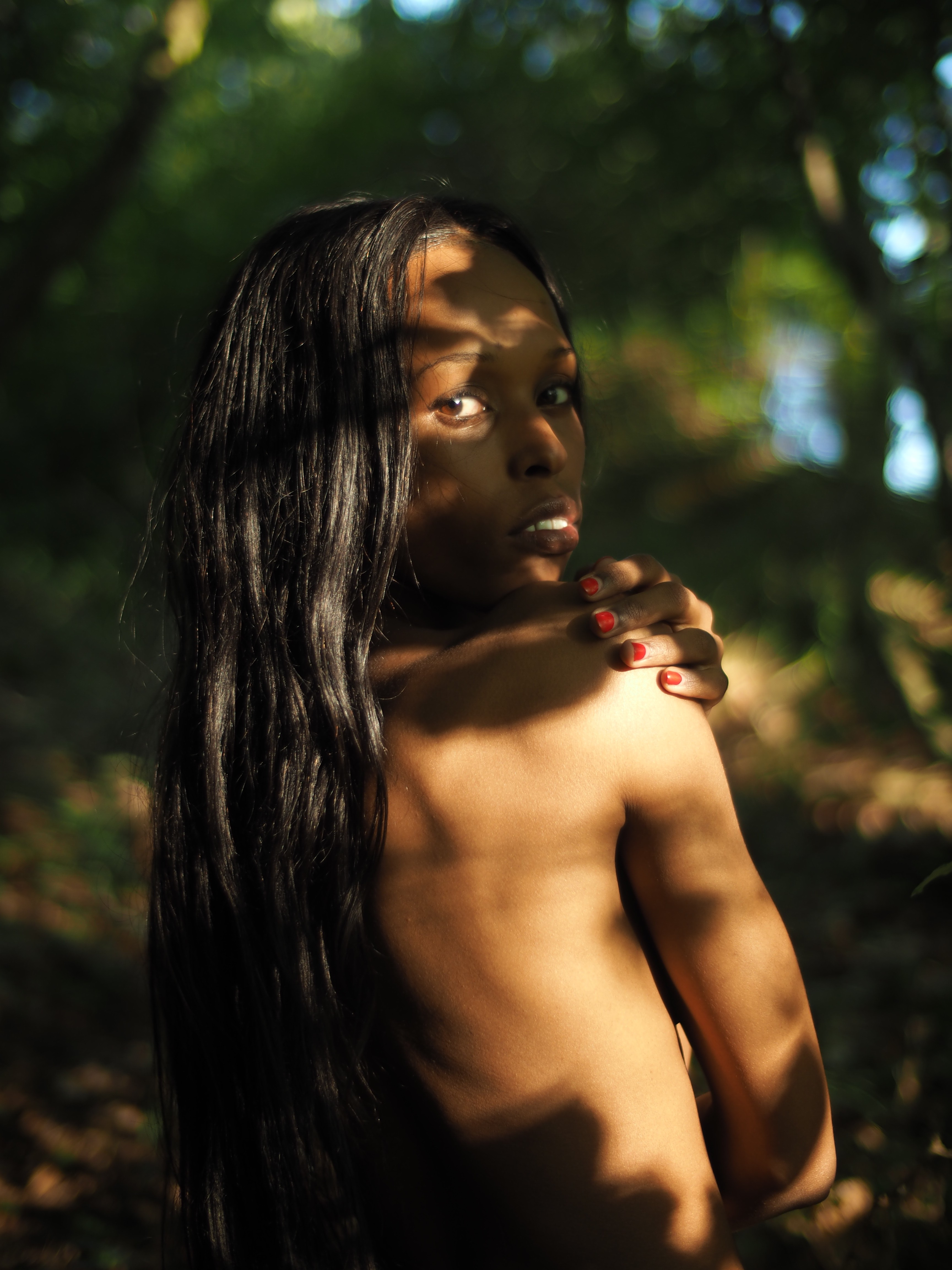
A woman stands with her back to you. Then she turns. Her head comes round over her shoulder and her eyes cut sideways back to where the camera is. Her hand rests on top of her shoulder, fingers loose. Very long straight black hair falls down the left side of the frame, almost to the bottom edge.
The lit eye sits just above the upper third line, between the two verticals.
The look over the shoulder works because it is a moment, not a position. Nobody stands like this for long. You read it as someone who was walking away and turned back for one second.
Look at the thirds grid. The eye that catches the sun sits just above the upper line, a little left of centre. It is not on a power point. It does not need one. In a frame this dark, the brightest small thing with a pupil in it wins, wherever it is.
**Basically,** She turns back over her shoulder and one eye catches the sun. That eye sits just above the upper third line.
## The only red
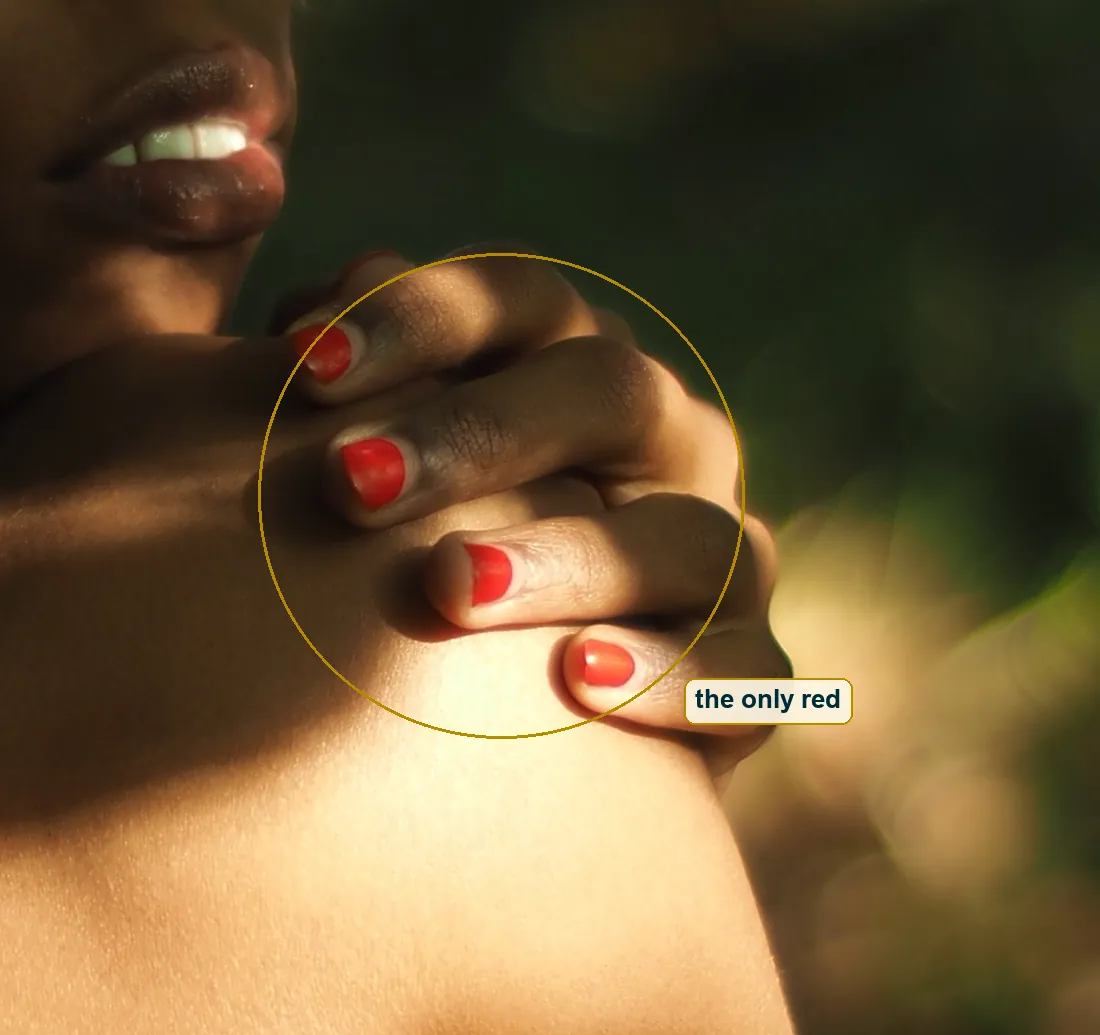
Scan the frame for colour. Green leaves, black hair, brown skin, a little blue sky. And then a few small red ovals on her fingertips.
The red nails are the only saturated red in the whole frame.
Measured with PIL, the nails are the only saturated red anywhere in the photo. Everything else is green, brown or near black. The mean colour of the whole frame is about 58 red, 51 green and 32 blue, so the picture is warm and dark, but not red. That is why the nails jump.
Chinese has an idiom for exactly this, 万緑叢中紅一点, one red flower among ten thousand greens. It goes back to a poem by the Song dynasty statesman Wang Anshi about a pomegranate flower. Figuratively it means one thing that stands out among many. Here it is literal. A small red in a big green, and it pulls your eye from her face down to her hand and back again.
**Basically,** "万緑叢中紅一点", one red among ten thousand greens. Chinese idiom from Wang Anshi. Her nails are that red.
## Light that leaks through trees
Japanese has a word for this light, komorebi, 木漏れ日. Tree, leaking, sun. Sunlight that leaks through leaves. English needs a whole sentence for it.
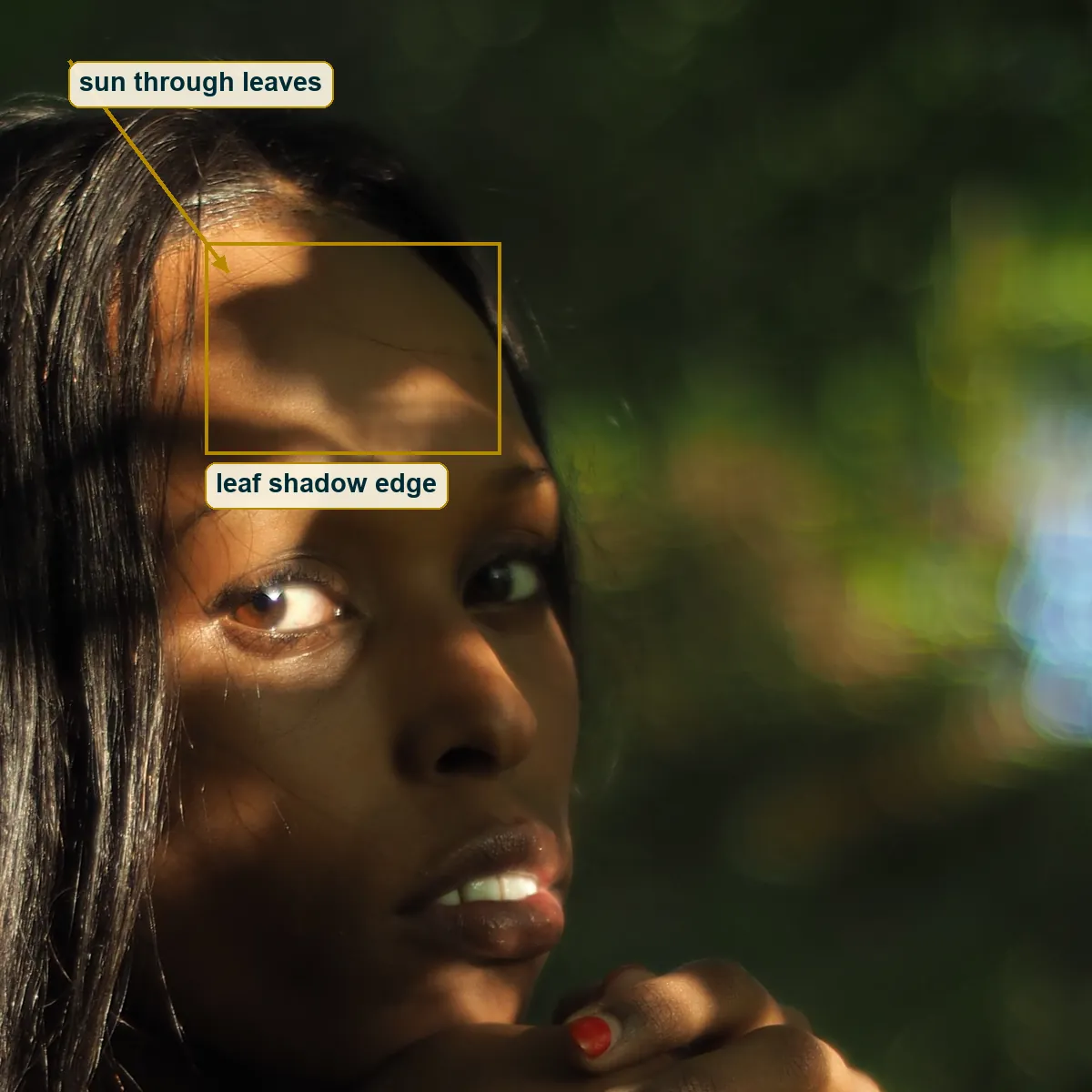
Sun comes through the leaves from the upper left and draws a shadow edge across her forehead.
You can read the direction of the sun from her face. The left half of the face, as you see it, averages about 70 out of 255. The right half averages 51. Her hair is brighter on the left too. So the light comes from your upper left, over her head, and the leaves above break it into patches. One patch lands across her forehead and her near eye. A darker band, the shadow of a leaf or a twig, cuts across the forehead above it.
This is not soft light. The edges of the patches are fairly sharp, because the light is direct sun, not sky. Direct sun at 19:31 also proves something about the day. It was clear enough for the sun to throw hard edges through a tree that late. That is all the weather the photo can prove.
Tagore, writing in his own English in Stray Birds in 1916, has a line on exactly this, thoughts that shimmer along with the leaves. It sits next to this section. Moving leaves make moving light, and you only get the patch where you want it for a few seconds.
**Basically,** "My thoughts shimmer with these shimmering leaves and my heart sings with the touch of this sunlight" Tagore.
## Measuring the sun patches
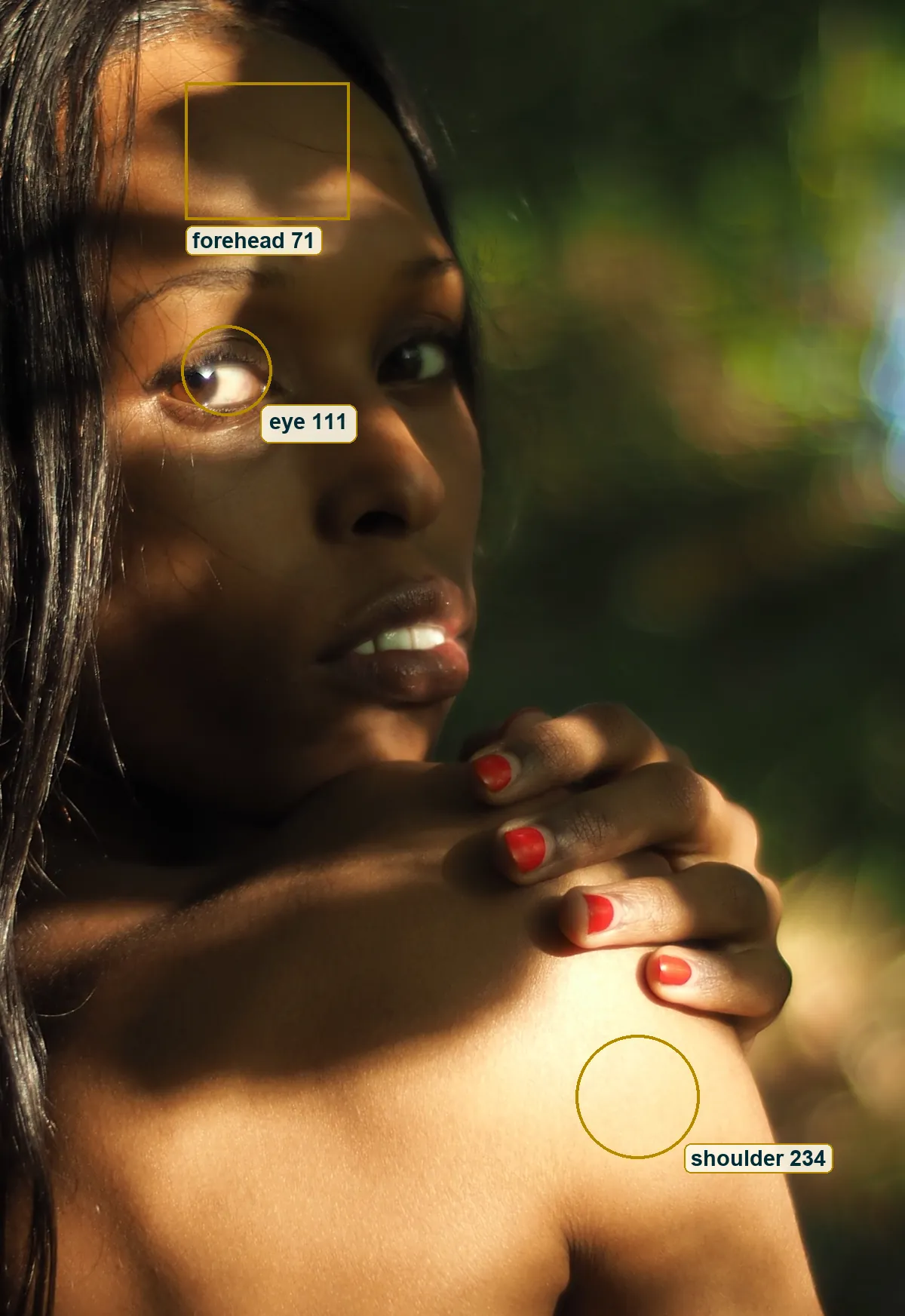
Your eye gets fooled by patchy light. Numbers do not. Here are four small areas, measured on a scale from 0 for black to 255 for white.
Forehead 71, lit eye 111, shoulder 234. The shoulder wins by a long way.
The sunlit patch on her shoulder, just below her fingers, is 234. The lit eye area is 111. The forehead is 71. The shaded cheek is 47. Her hair is about 19.
Those numbers are not linear. Turn them back into real light and the gaps get bigger. The shoulder gets about 2.4 stops more light than the lit eye, so more than five times as much. It gets about 3.7 stops more than the forehead and almost 5 stops more than the cheek. Five stops is thirty two times the light. All of that sits inside one hand span of skin.
This is komorebi in numbers. One patch of direct sun next to open shade, and the camera has to pick. It picked the face, and let the shoulder run hot.
**Basically,** Shoulder 234, lit eye 111, forehead 71, cheek 47. From shoulder to cheek is almost five stops in one hand span.
## What the file says
The JPEG still carries its EXIF. Here is what the camera wrote down, as fact.
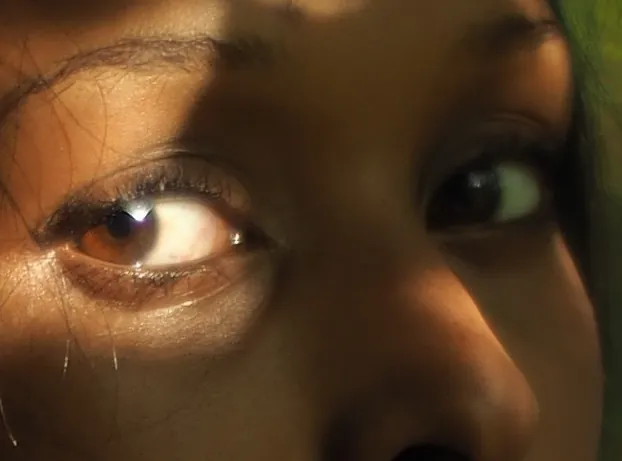
At full size the lit eye shows single lashes and a catchlight. The other eye stays in shade.
The camera is an Olympus OM-D E-M5 Mark II, firmware 4.1. It has a Micro Four Thirds sensor of 17.3 by 13 mm, a crop factor of 2, and 16 megapixels, 4608 by 3456. The photo was taken on 12 June 2025 at 19:31:20 by the camera's own clock. That was a Thursday. The clock stored no time zone, and the UTC field is empty, so you know the second but not where on Earth that second was.
The mode was manual. Shutter 1/320 s, ISO 100, exposure compensation zero, metering ESP, the multi segment kind. ISO 100 is an extended setting on this body. Base ISO is 200, and going below it costs a little room in the highlights. Keep that in mind for the shoulder.
White balance was set by hand to 6000K, the Cloudy preset, in direct evening sun. Cloudy in sun tells the camera the light is bluer than it is, so it warms everything. That is part of why her skin glows and why the frame averages so little blue. Picture mode Natural, contrast, saturation and sharpness all at zero, gradation Normal, noise reduction Auto. Distortion correction off. Shading compensation off, so any darkening toward the corners stays in the file.
The shutter was mechanical, single shot. Body stabilisation was on, S-IS Auto. Olympus claimed up to 5 stops for this five axis system. Flash mode says fill in, but no flash was attached and none fired.
Look at the crop above. At full size you can see single lashes and a catchlight in the lit eye. Measured for sharpness, the eyes and the nearby fingers are the crispest part of the frame. Focus went where it should.
**Basically,** Manual mode, 1/320 s, ISO 100, 6000K, no lens data, no GPS, no time zone. The file knows the second, not the place.
## Forty minutes apart
The same camera made another frame that evening, 40 minutes later, at 20:11. That one is a portrait under pines in low open sun, written up in A tree does not burn alone. It was shot at 1/8000 s. This one is 1/320 s.
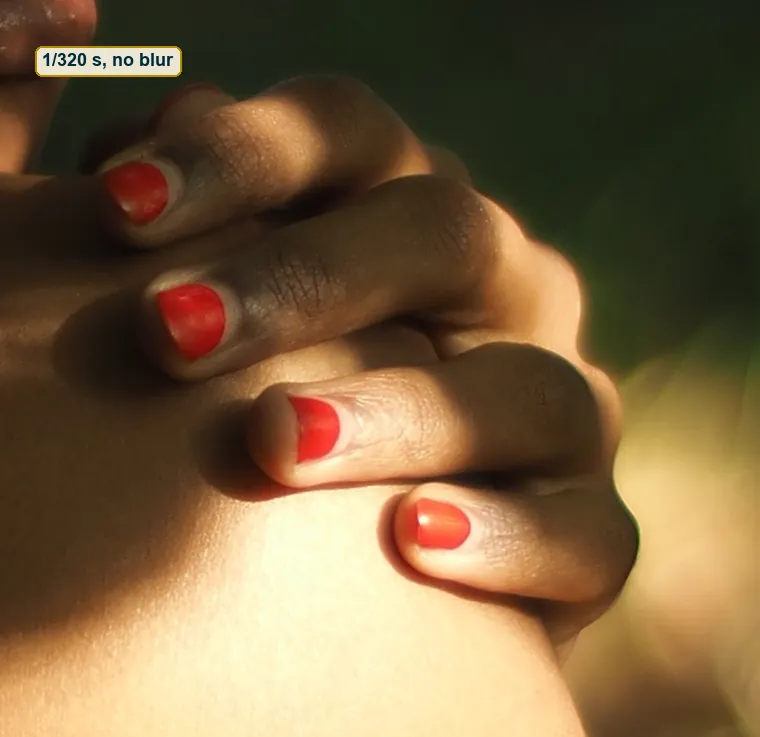
At 1/320 s a still hand shows no blur. Knuckle lines stay crisp.
From 1/8000 to 1/320 is 25 times longer, about 4.6 stops. Same ISO, same camera. So either the light was weaker here, or the aperture was smaller, or both. The leaves explain most of it. Here her face is in shade, and shade under a tree is often three to four stops darker than open sun.
You can estimate the aperture with Sunny 16. In full sun at ISO 100 you get a good exposure at 1/100 s and f/16. At 1/320 s that becomes about f/9. But her face is not in full sun. It is in leaf shade, and it came out a little under middle grey, so the exposure was set for the shade. Shade under a tree is often three to four stops below sun. Open up three to four stops from f/9 and you land at roughly f/2.8 to f/4. The sunlit shoulder agrees. It came out about 2.2 stops above middle grey, which is what happens when you expose for shade and a patch of sun sneaks in.
That is an estimate with reasons, not a reading. The blurred discs in the background lean wider. If she stood about a metre and a half away, a 25mm lens wide open would draw discs of around 90 pixels on this sensor, and one disc here measures about 115. So the true aperture could be wider than f/2.8, with the face simply exposed a bit darker. The lens reports nothing, so the file cannot settle it. What is sure is that at 1/320 s a still hand does not blur. The crop above shows clean knuckle lines.
**Basically,** 1/320 s here, 1/8000 s forty minutes later. 4.6 stops apart, and the leaves explain most of it.
## The lens with no name
Every lens field in the file is empty. Focal length 0. Aperture 0. Lens type None. Focus mode MF, and the autofocus was not used. That is what a manual lens without electronic contacts looks like to the camera. It has no idea what is in front of it.
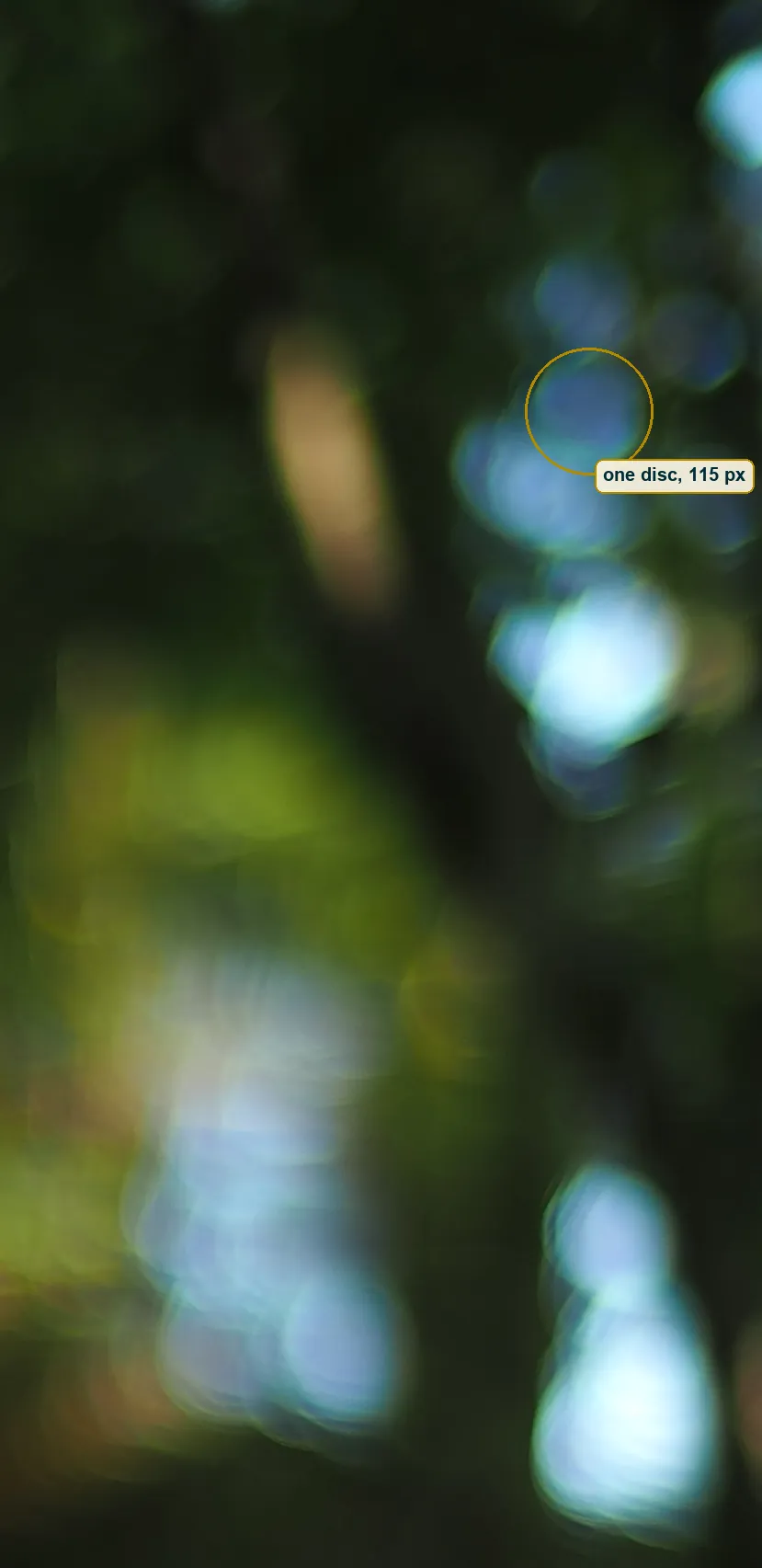
One out of focus highlight measures about 115 pixels across.
The likely lens is the Voigtländer Nokton 25mm f/0.95, a 50mm equivalent on this sensor. The evidence is circumstantial. Empty fields, manual focus, the same body, the round discs in the background, and an earlier post on this site about a day in Kuala Lumpur with exactly this pairing. Likely, not proven.
One disc in the upper right measures about 115 pixels wide. Round, soft, no hard ring. Lenses like this make the background melt even when stopped down a little.
There is a Swahili proverb for manual focus, haraka haraka haina baraka. Hurry hurry has no blessing. With a lens like this you turn a ring, watch the eye in the finder, and wait. Here it worked. The sharpest pixels in the frame are on the eyes.
**Basically,** "Haraka haraka haina baraka." Hurry hurry has no blessing. Swahili proverb. A lens you focus by hand.
## Half the frame is black
This is a low key photo. Most of it is dark on purpose.
Hair averages 19 out of 255. The upper left background sits near black.
The median brightness of the whole frame is about 32 out of 255. Almost 70 percent of all pixels are below 50. About 10 percent are at 8 or below, which is black for any screen. Her hair averages 19. At the other end, almost nothing is pure white. Less than a tenth of one percent of pixels reach 250.
The frame lives in the dark and lets a few small lights carry it. The hair is a big black shape around the face. The trees behind fall into green black. Nothing distracts.
Tagore has a line for this too, also from Stray Birds, where shadow walks quietly behind light. Here the shadow does not follow. It holds the picture together, and the light only gets small places.
**Basically,** "Shadow, with her veil drawn, follows Light in secret meekness, with her silent steps of love." Tagore.
## A Thursday in June
12 June 2025 was a Thursday. The date carries more than this picture.
One eye in the sun, one in the shade. A diary page with a timestamp and no names.
On 12 June 1942, Anne Frank turned 13. One of her presents was a red and white checkered autograph book. She used it as her diary and wrote it as letters to Kitty. Almost two years later, on 7 March 1944, she wrote that you should think of the beauty still around you. The line in one translation sits next to this section. A photo file works a bit like a diary page. It has a date, a time and a moment. It does not have the words.
On 12 June 1987, Ronald Reagan stood in front of the Berlin Wall and said, "Mr. Gorbachev, tear down this wall!" Two years later it came down. A tree is a softer kind of wall. It stops most of the sun, and the gaps decide where the light gets through.
On 12 June 1967, the US Supreme Court decided Loving v. Virginia and struck down the bans on marriage across racial lines. Richard Loving had sent one message to the court through his lawyer, "tell the Court I love my wife". People in the US mark 12 June as Loving Day.
None of this is in the picture. The date is the only link.
**Basically,** "Think of all the beauty still left around you and be happy." Anne Frank, who got her diary on 12 June.
## No GPS, no place
You will not learn where this was taken. Not from the text and not from the file.
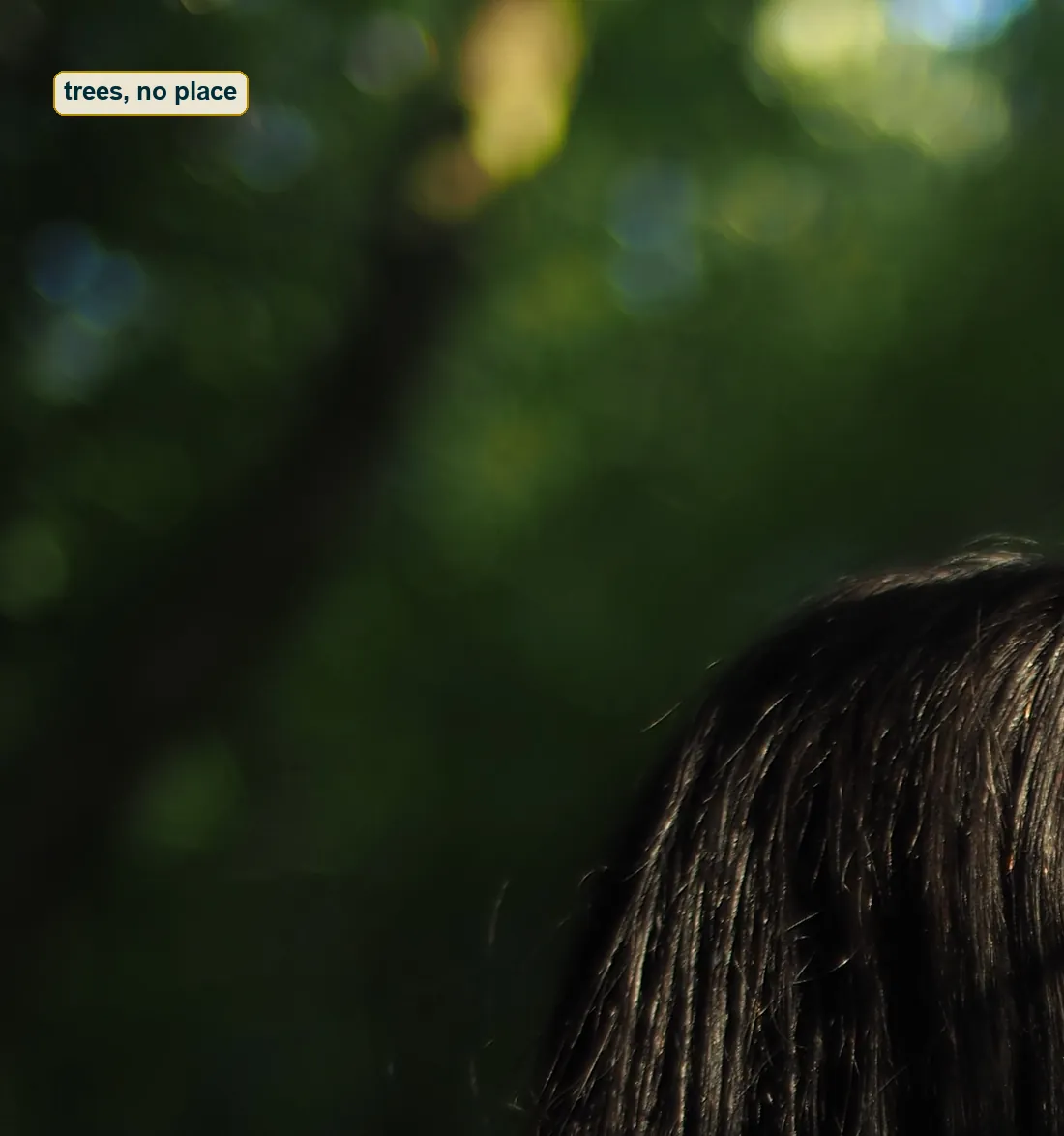
Blurred trees and leaves. Nothing here names a place.
The E-M5 Mark II has no GPS module. Some cameras write latitude and longitude into every file. This one cannot. You can add location later from a phone, but nobody did that here. The GPS fields are empty.
The background does not help either. Blurred leaves, trunks, a little sky, brown ground. That could be a park or a wood in many countries.
So the only clue is time. 19:31 with direct sun still coming through the trees, nine days before the June solstice. That fits a long northern summer evening. It also fits many other places. The camera clock has no time zone, so even 19:31 is only the camera's opinion. Saying "unknown" is more honest than a guess.
**Basically,** The E-M5 II has no GPS. Trees, leaves, a patch of sky. You will not find the place, and that is honest.
## The moon nobody saw
The full moon of June 2025 was on 11 June at 07:44 UTC, the night before this picture. People called it the Strawberry Moon. It was also the lowest riding full moon since 2006, because the moon was close to its major lunar standstill, an 18.6 year cycle.
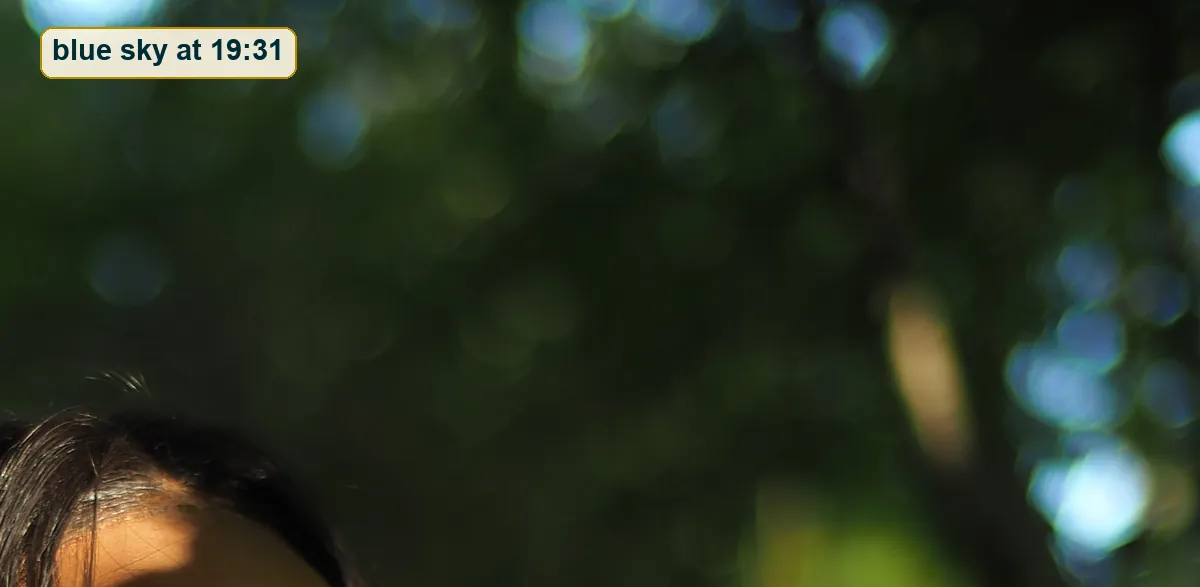
Blue sky through the leaves at 19:31. No moon yet.
On the evening of 12 June the moon was still about 97 percent lit, and it rose after sunset. So at 19:31 it was not in this sky. The top of the frame shows only leaves and pale blue gaps.
The other big date was nine days away. The solstice fell on 21 June 2025. These are the longest evenings of the year, and you can see it in the file. At 19:31 the sun is still strong enough to throw hard patches. Forty minutes later it was still low and bright enough for the 1/8000 s frame under the pines.
Japanese has a proverb for this kind of evening, 月に叢雲花に風, tsuki ni murakumo hana ni kaze. Clouds over the moon, wind over flowers. Good things do not last. A sun patch through leaves lasts a few seconds before the wind or the sun moves it.
**Basically,** "月に叢雲花に風", clouds over the moon, wind over flowers. Japanese proverb. Good light does not stay.
## The one mistake
The brightest thing in this photo is her shoulder. Not her eye.
The brightest spot is the shoulder under her fingers. The light belongs on the eye.
Your eye goes to the brightest area first. Here that is the sun patch on the shoulder at 234, and the warm skin of the back below it. The lit eye is 111. So you look at the shoulder, then the nails, and only then find the face. About one percent of all pixels have the red channel clipped at full value, and almost all of them sit on that shoulder and back. With ISO 100 below base, and a 6000K white balance warming everything, that patch runs out of room first.
It is a small mistake. The eye still wins in the end, because it has a catchlight.
There are two fixes. The first one is free. Move half a step, or ask her to lean a few centimetres, so the sun patch lands on her face and the shoulder falls into shade. Then the brightest thing and the most important thing are the same thing. The second fix is in the edit. Bring down the highlights on the shoulder by about a stop with a brush, and leave the face alone. That rescues the balance, but not the clipped red. That part is gone.
**Basically,** The brightest thing in the frame is the shoulder, not the eye. Half a step moves the sun to where you look.
## Try this
Find a tree with small gaps in the leaves, on a clear evening an hour or two before sunset. Walk under it and watch the ground. You will see bright patches move.
Sun from the upper left, one patch on one eye, focus on that eye.
Put your subject so one patch falls across one eye and the forehead. The rest of the face stays in shade. Check the shoulders and arms. If a brighter patch sits there, move a little until it is gone.
Set the camera to manual. Meter on the lit eye and the skin around it, not on the whole frame. If you use spot metering, add about two thirds of a stop so skin stays skin and not grey. Use a fast lens if you have one, but you do not need f/0.95. At f/2.8 the background will still go soft if it is far enough away.
Focus on the lit eye. With a manual lens, take your time and turn the ring slowly. Ask for the look back over the shoulder, and shoot a few frames, because the leaves will move the light between them.
Then leave the dark alone. Do not lift the shadows. Let half the frame go black, and let one eye and one small red carry the picture.
**Basically,** Find a tree with small gaps, put one patch of sun on one eye, and expose for that eye. Let the rest go dark.
## Sources
- [mchumia juani hulia kivulini, Wiktionary](https://en.wiktionary.org/wiki/mchumia_juani_hulia_kivulini) Swahili proverb, literally one who toils in the sun eats in the shade: hard work comes before the reward.
- [万緑叢中紅一点, Wiktionary](https://en.wiktionary.org/wiki/%E4%B8%87%E7%B7%91%E5%8F%A2%E4%B8%AD%E7%B4%85%E4%B8%80%E7%82%B9) One red flower among ten thousand greens, from a pomegranate poem by Wang Anshi.
- [木漏れ日 (komorebi), Wiktionary](https://en.wiktionary.org/wiki/%E6%9C%A8%E6%BC%8F%E3%82%8C%E6%97%A5) Sunlight filtering through trees, from tree plus leaking plus sun.
- [Rabindranath Tagore, Stray Birds (1916), Wikisource](https://en.wikisource.org/wiki/Stray_Birds) Nos. 47 and 150, in Tagore's own English.
- [haraka haraka haina baraka, Wiktionary](https://en.wiktionary.org/wiki/haraka_haraka_haina_baraka) Swahili proverb, literally hurry hurry has no blessing.
- [Olympus OM-D E-M5 Mark II, Wikipedia](https://en.wikipedia.org/wiki/Olympus_OM-D_E-M5_Mark_II) Micro Four Thirds, 16 MP, five axis stabilisation rated at up to 5 stops.
- [Kuala Lumpur day trip with the E-M5 II and Voigtländer 25mm f/0.95, emin.de](https://emin.de/posts/kuala-lumpur-photography-day-trip-with-omd-em5ii-and-voigtlaender-25mm-f0-95-and) Earlier post with the same body and the Nokton lens.
- [A tree does not burn alone, emin.de](https://emin.de/posts/photo-pine-forest-portrait-evening-sun) Sibling frame from the same evening, 20:11, 1/8000 s.
- [Anne Frank, Wikipedia](https://en.wikipedia.org/wiki/Anne_Frank) Received the red and white checkered autograph book on her 13th birthday, 12 June 1942.
- [Anne Frank, Wikiquote](https://en.wikiquote.org/wiki/Anne_Frank) Diary entry of 7 March 1944, variant translation: Think of all the beauty still left around you and be happy.
- [Tear down this wall!, Wikipedia](https://en.wikipedia.org/wiki/Tear_down_this_wall!) Speech of 12 June 1987.
- [Loving v. Virginia, Wikipedia](https://en.wikipedia.org/wiki/Loving_v._Virginia) Decided 12 June 1967. Richard Loving: tell the Court I love my wife.
- [Full Moon June 2025, Forbes](https://forbes.com/sites/jamiecartereurope/2025/06/05/full-moon-june-2025-when-to-see-the-strawberry-moon-rise-and-fall) Strawberry Moon, full on 11 June 2025 at 07:44 UTC, lowest full moon since 2006.
- [月に叢雲花に風, Wiktionary](https://en.wiktionary.org/wiki/%E6%9C%88%E3%81%AB%E5%8F%A2%E9%9B%B2%E8%8A%B1%E3%81%AB%E9%A2%A8) Japanese proverb, clouds over the moon, wind over flowers: good things do not last.