Panpsychisms: A Comparative Map

TL;DR: Panpsychism says some kind of experience is basic and everywhere in reality, not a late accident. Its versions run from micropsychism and panprotopsychism to cosmopsychism, qualia force and qualia space models. It is no longer fringe, but it still has to solve the combination and decomposition problems.
Panpsychism is the view that something like mind, some kind of experience, is basic and is everywhere in reality. It doesn't have to mean that rocks have human minds. It means consciousness is not a late accident, but part of the fabric of what exists.
It's coming back today because people are unhappy with both sides. Reductive physicalism has a hard time with qualia, and substance dualism has a hard time with how mind and body act on each other.
If you're new to this, here is the two minute version. It's a map and not a final answer. Each part explains one idea in plain words and then shows where it helps and where it struggles. You don't need to agree with all of it. You just need to see the options clearly.
Micro, proto and cosmic
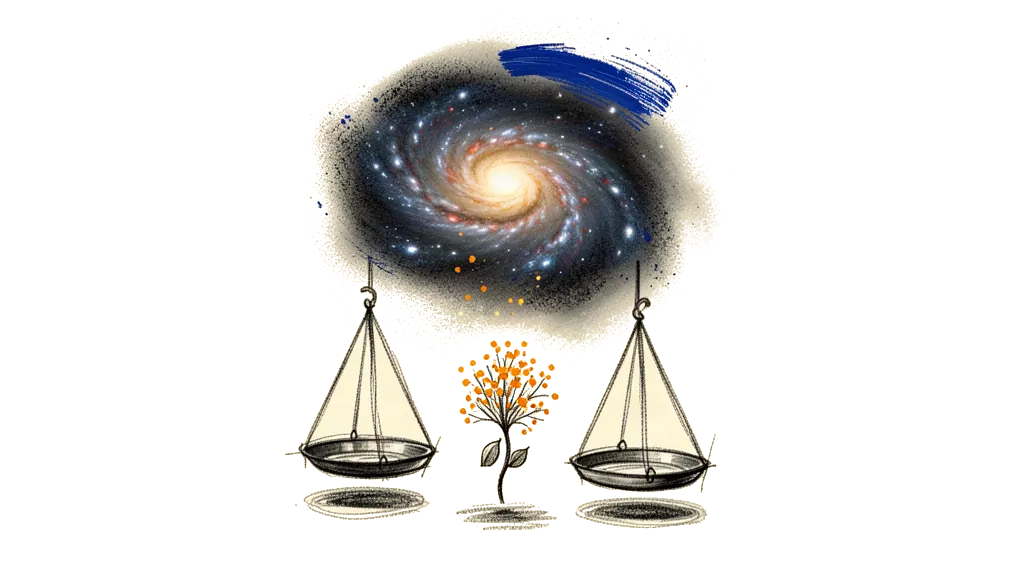
Micropsychism says the tiny parts of reality have very simple experiences, and complex consciousness comes out of how they combine.
The good part is a natural line from the smallest level up to complex minds. The big problem is the combination problem. It's not clear how many tiny experiences turn into one single big experience.
Panprotopsychism is a softer version of micropsychism. Here the basic things have proto-phenomenal properties. They're not full experience yet, but they can be the ground for it.
The plus is that you don't have to put rich experience at such a low level. The challenge is to explain how these proto properties cross the line into real experience.
Cosmopsychism turns it around. The cosmos as a whole is the basic subject, and our single minds are parts or expressions of it.
Why people like it is that it may make the combination problem easier, because it swaps it for a decomposition problem. But then there is a new question, and that is how one cosmic consciousness gives you many separate points of view.
Qualia force and qualia space

Qualia force frameworks say that how experience feels is not a passive side effect. It's tied to what moves us and to how things change.
The value could be a bridge between how things feel and what causes what. The risk is that without careful formal work it just drifts into metaphor.
Qualia space approaches model experiences as points in structured spaces or geometries.
The good part is that you can compare experiences precisely. The open issue is how to map that formal geometry to what neurons do and to what grounds it all.
Chalmers, Strawson and Goff
David Chalmers did a lot to make panpsychist and panprotopsychist options serious again. He argued that reductive accounts leave the hard problem unsolved. What he brought is clear concepts and real metaphysical alternatives.
Galen Strawson's realistic monism says that if consciousness is real, and everything is physical, then the physical must have experience in it at its base. He is a key bridge between the language of physicalism and what that means for panexperientialism.
Philip Goff is one of the leading defenders of panpsychism today. His strength is that he shows clearly why panpsychism may do better than both dualism and reductionism on the hard problem. The central hurdle is still how combination and decomposition work.
Tye, Mørch and the critics
Michael Tye is often linked with representationalist theories, and he is often critical of some panpsychist moves. He is on this map because he stands for the pressure from theories that want to explain how experience feels through what it represents, and not through a panpsychist ontology.
Hedda Hassel Mørch builds careful panpsychist and related arguments, mostly around phenomenal consciousness and explanatory gaps. She brings refined answers to the big objections and handles the questions about what makes up a mind with care.
Susan Schneider and Andrew Bailey, and others in this group, add critical and open discussion about what consciousness is, about AI consciousness, and about being precise with concepts. In the panpsychism debate they keep the scope clear. They push back when it gets stretched too far, but they still take the question seriously.
The Kadić-linked lines in this area try to bring together the structure of how things feel, metaphysics and current models. The value is that this widens the comparison and keeps panpsychism in conversation with the ideas next to it.
Where panpsychism stands

Panpsychism is no longer fringe in serious philosophy of consciousness. It wins points because it takes experience as basic data and avoids interaction dualism. But it still has to solve its structural problems, mostly combination and decomposition, with stronger formal tools.
The most likely future is hybrid models. They would combine panpsychist ideas with information geometry, causal emergence and limits from neuroscience.
A few words in plain English

A few words in plain English, if you need them. Consciousness is your felt inner experience, what it is like to be you. Physicalism is the view that reality is fully part of nature and physics. Dualism says mind and matter are deeply different in at least one important way.
Monism says reality is in the end one kind of thing or one basic principle. Emergence means complex systems can show new patterns that you can't see from their parts alone. Qualia are the felt qualities of experience, like the redness of red or pain as it feels. And the explanatory gap is the gap between describing what the brain does and explaining how it feels.