Monisms: A comparative map across science and philosophy

TL;DR: Monism says reality is basically one kind of thing, but it comes in materialist, idealist, neutral, informational, cosmopsychist and process versions. This map walks through twelve thinkers, from Russellian monism and Davidson to Tegmark, QRI and John Leslie. You can compare them by what they take as the bottom of it all: structure, experience, aspects, process, or value. Monism isn't a final answer. It's a disciplined bet that the fragmentation isn't the last word.
One kind of thing underneath
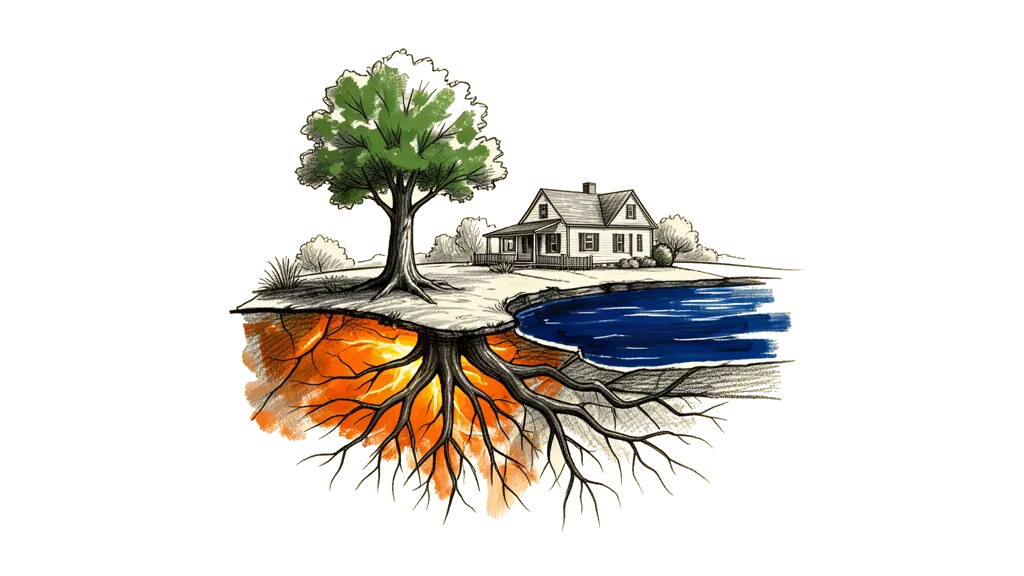
Monism is a family of views that say reality is basically one kind of thing, one principle underneath, or one ground.
Dualism splits reality into mind and matter, or spirit and body, and monism says that split comes later and isn't the bottom of it.
But "monism" is not one doctrine. There are materialist, idealist, neutral, informational, cosmopsychist and process versions. Some put physics first, some put phenomenology first, and some try to bring both together.
This text maps the big monist positions and the thinkers in the list, twelve of them, and at the end there is a practical way to compare them.
If you're new to the philosophy of consciousness, the short two minute version is this. It's a map and not a final answer. Each part explains one idea in plain words and then says where it helps and where it struggles.
You don't need to agree with all of it, the goal is just to see the options clearly.
Russell and Davidson
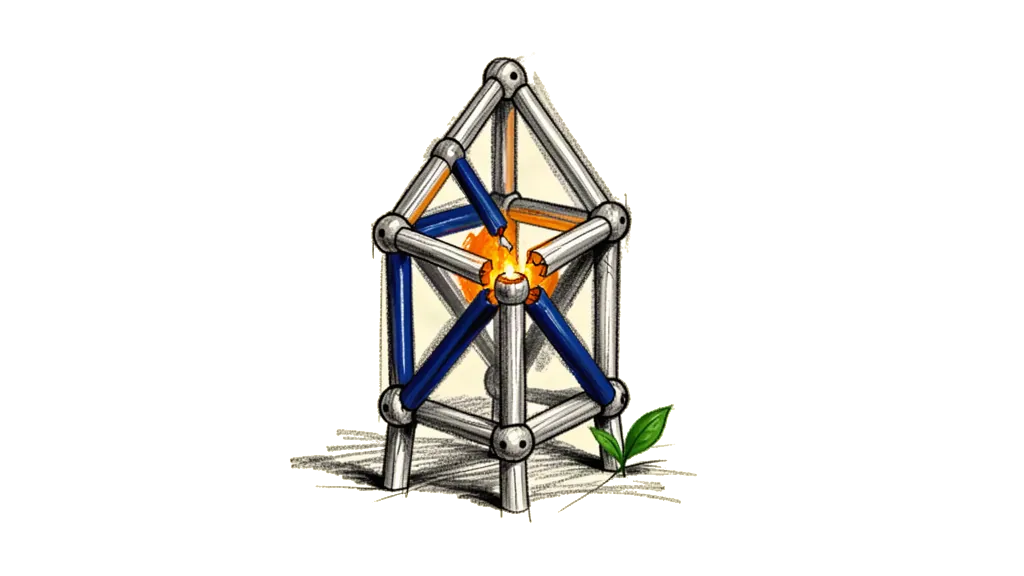
Number one is Russellian monism. It starts from a simple observation that goes deep. Physics describes structure, relations and behavior, but it may say nothing about what things are in themselves.
If that's true, then the inner nature of reality could be connected to, or even the same as, what we know from the inside as consciousness. So physics gives us the outside, the structure, and experience may show us the inside, and one ontology could bridge both without a crude reduction.
Why it matters is that it doesn't have to deny consciousness like eliminativism does, it avoids the dualist puzzle of how mind and body interact, and it keeps scientific realism while it widens what counts as real.
The open problem is to say how the unity of a big conscious mind and the small physical descriptions fit together, without hand-waving.
Number two is Donald Davidson's anomalous monism, and it's often misunderstood. He argues that every mental event is the same as some physical event, but there are no strict psychophysical laws in mental vocabulary the way there are strict physical laws.
So it's token identity, mental events are physical events, but there are no strict bridge laws between mental and physical descriptions. Mental concepts follow a rational, normative holism and not only mechanical law.
What Davidson gives monism is a non-reductive version where there is one ontology, but the vocabularies we explain things with stay plural and can't be reduced in practice.
Velmans and Strawson

Number three, Max Velmans proposes reflexive monism. Mind and world are not two separate containers. Conscious experience is not just an inner representation and also not a naive outside object, it's a presentation that is built out of the relation.
It drops the simple split into inner and outer, it keeps the first person reality of experience, and it connects phenomenology with cognitive science without folding one into the other.
That makes it especially useful for consciousness science, because it takes both careful experiments and lived experience seriously.
Number four is Galen Strawson's realistic monism, a strong position against eliminativism. If experiential consciousness is real, and it is, then any physicalism that is good enough has to include it as part of what the physical basically is.
His famous pressure point goes like this. If you deny consciousness, you deny the most certain thing you have. If you keep consciousness, reductionist physicalism has to change.
So the "real physical" may already include experience. This is often read as a road to panpsychist or panexperiential monism.
Polkinghorne and Teilhard

Number five, John Polkinghorne pushes back against strict reductionism and still stays close to science. His approach is often called dual-aspect or critically realist, but it carries a monist pull, one reality that shows up under different lenses of explanation.
What's special is that he brings science, metaphysics and theology together, he resists nothing-but explanations, and he puts weight on layers of intelligibility and meaning. What he adds here is a kind of humility in method.
Monism doesn't have to flatten value, agency or meaning. That's why this one is called dual-aspect with theological monism tendencies.
Number six, Teilhard de Chardin sees cosmogenesis and noogenesis as one process that unfolds. Matter, life, mind and spirit are phases of one evolutionary arc that moves toward more complexity-consciousness and toward unification, the Omega Point.
This is evolutionary cosmic monism. It's a big synthesis that brings cosmology and interiority together, it tells a story with a goal and with meaning for human life, and it builds a bridge between scientific evolution and a spiritual view of the human.
The critique is that it's still disputed whether claims about a goal in evolution can be tested at all, and there is a risk of turning historical accident into too neat a system. Still, Teilhard is one of the most influential evolutionary monists.
Atmanspacher and Pereira
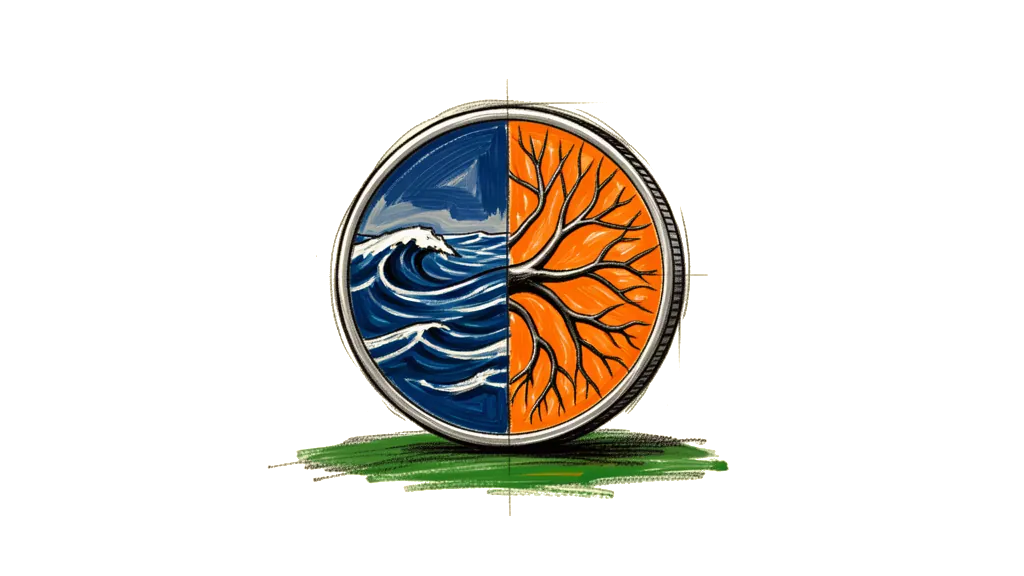
Number seven, Harald Atmanspacher works on dual-aspect and complementarity frameworks, often tied to generalized quantum-like formalisms and to complementarity. His work builds careful ways to model how mind and matter relate without reducing either one to the other.
The core idea is that one reality underneath can allow descriptions that complement each other and depend on context, and mental and physical can both be original aspects of one domain.
That supports a monism with real structure, which avoids crude materialism and also vague mysticism.
Number eight, Alfredo Pereira Jr. works on triple-aspect and neurophenomenological integration. He looks at frameworks where the neural, the informational and the experiential are modeled together. It's not always labeled monism, but it points the same way, one process with several aspects that can't be pulled apart.
That fits interdisciplinary consciousness research better, it avoids one language ruling over all the others, and it pushes for formal bridges between what people report from the inside and what neurons do.
Ramachandran and Tegmark

Number nine, V. S. Ramachandran isn't a classic builder of a metaphysical system. But his work shows how rich subjective things like body image, self-models and strange cases close to qualia can be studied through neurobiology.
Call it neurobiological monism with a feel for phenomenology. There is one natural world with deep structure. Subjective oddities are not noise, they are clues to how the system is built.
And consciousness science moves forward when bold explanations are grounded in experiments. His style is a good antidote to both armchair metaphysics and flat reduction.
Number ten, Max Tegmark's strongest thesis, the Mathematical Universe Hypothesis, pushes monism toward a radical mathematical realism, where physical reality is mathematical structure. Mathematical or physical monism attracts monists because it gives the most unification with the fewest assumptions, and it fits the strange way mathematics just works in physics.
It stays controversial because the jump from "can be described by mathematics" to "is the same as mathematics" is a big one, and nobody has solved how formal structure connects to lived consciousness.
Tegmark matters because he stands at the far edge of what formal monism wants.
QRI and Leslie
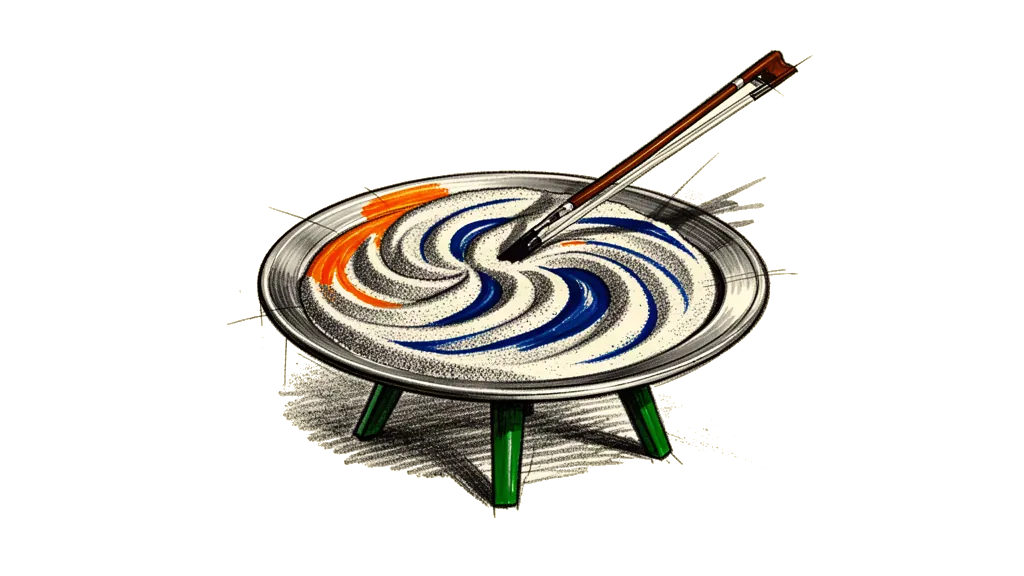
Number eleven, the Qualia Research Institute (QRI) works on formal approaches to valence and to the texture of consciousness, often through dynamical, informational and geometric lenses. You can read it as a practical monist research program toward a monism of experience quality.
Subjective quality follows laws, can be handled by structure, and is continuous with physical process. It could make phenomenology something you can compute with, it connects ethics, meaning well-being and suffering, with formal models, and it pushes for a consciousness science that is precise and humane at once.
The open issue is that theory-ladenness and the standards for validation are still being argued about.
And number twelve, John Leslie's philosophical cosmology gives unusual weight to value and ethical necessity when it explains why anything exists. His work can't be put into one school, but it supports a value-centered cosmic monism, where the unity of reality is not only mechanical but axiological.
He belongs in monist discussions because he questions ontologies that are neutral about value, he asks whether goodness is basic in explaining things, and he widens monism from a "stuff ontology" into a "value ontology".
What kind of one is one

So what kind of one is "one"? A good way to compare monisms is to ask what exactly they take as the bottom of it all. There are five answers.
The first is a physical, structural one, with Tegmark style extremes. The second is an experiential, intrinsic one, which is where Strawson and the Russellian line go. The third is an aspect one, with Davidson, Velmans, Atmanspacher and Pereira.
The fourth is an evolutionary process one, Teilhard. And the fifth is a value and meaning one, Leslie, and the concerns close to Polkinghorne. Different answers lead to different research programs, different ethics and different limits.
What monism solves and what not

So what does monism solve and what not? It does a few things well. It avoids dualism's brute problem of how two kinds of thing interact, it pushes for unification across fields, and it forces you to be clear about levels of explanation.
Other things stay hard. Exact bridge principles between experience and physics are still missing. There is the problem of individuation, why are there many minds if there is one ground? There is the place of normativity and value in formal systems.
And it's hard to decide between sophisticated monisms with experiments. Monism isn't a final answer, it's a disciplined bet that the fragmentation isn't the last word.
If you want a monism that works for research today, you can take first person experience as data you can't throw away, take third person science as a constraint you can't do without, use many vocabularies to explain but commit to one ontology, and treat ethics and valence as central to the structure and not as decoration. That keeps rigor without reduction and depth without being obscure.
At its best, monism is not the slogan "everything is one". It's the demand that our ontology hangs together well enough to include mathematics, matter, mind, meaning and value without denying any of them and without counting anything twice.
The thinkers in this map disagree a lot, but they share one intuition. The cracks in our picture of the world may come from descriptions that aren't complete yet, not from reality itself.
Idealism asks whether consciousness comes first. Monism asks a broader question, what single framework can hold all the data with nothing left over? That is still open, and it's exactly why this conversation matters.
A few words in plain English

A few words in plain English. Consciousness is your felt inner experience, what it is like to be you. Physicalism is the view that reality is fully part of nature and physics.
Dualism says mind and matter are basically different in at least one important way. Monism says reality is in the end one kind of thing or one principle underneath. Emergence means complex systems can show new patterns that you don't see from their parts alone.
Qualia are the felt qualities of experience, like the redness of red or pain as it feels. And the explanatory gap is the gap between describing brain processes and explaining how it feels.