Exploring renewable energy: Our journey to build an air-powered water-driven flywheel
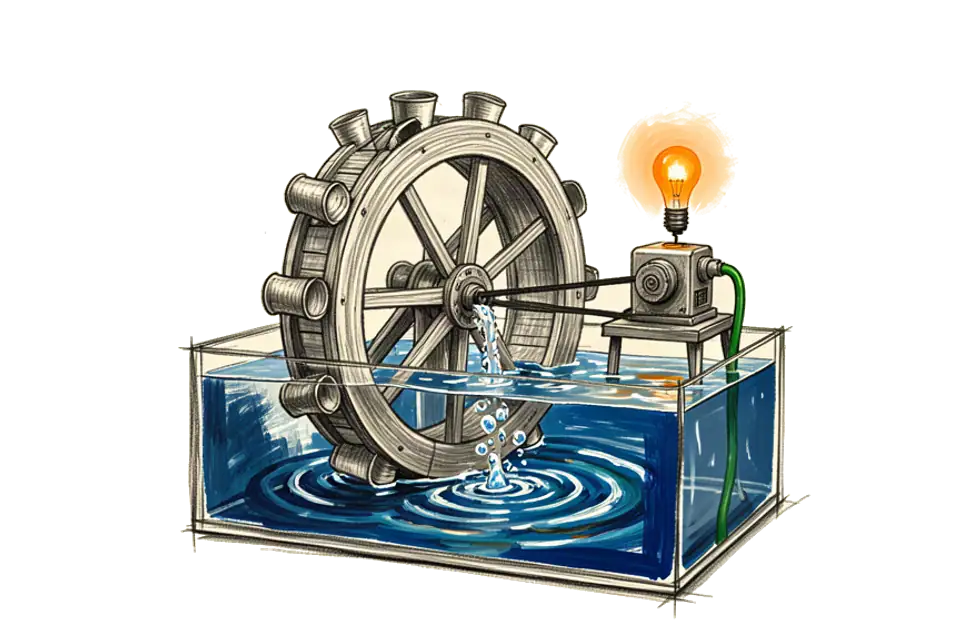
TL;DR: In Zanzibar we are building a cheap prototype where rising air bubbles in water turn a flywheel. The flywheel drives a generator that could light an LED or charge a battery, with no fossil fuels. It is still early, and we want feedback, materials and support.
Imagine a system that uses air and water to make something move. A cheap, renewable way to make energy. That is the idea we are working on, right here in Zanzibar. We want to build a simple prototype that shows how everyday things, air, water and a few basic parts, could give us sustainable energy.
The project is still early. But with some creative engineering we believe it could lead to something practical. The prototype uses the buoyancy of air in water to turn a flywheel, maybe with enough power for small tasks. Here is what we are doing, how it works and how you can help make it better.
How it works
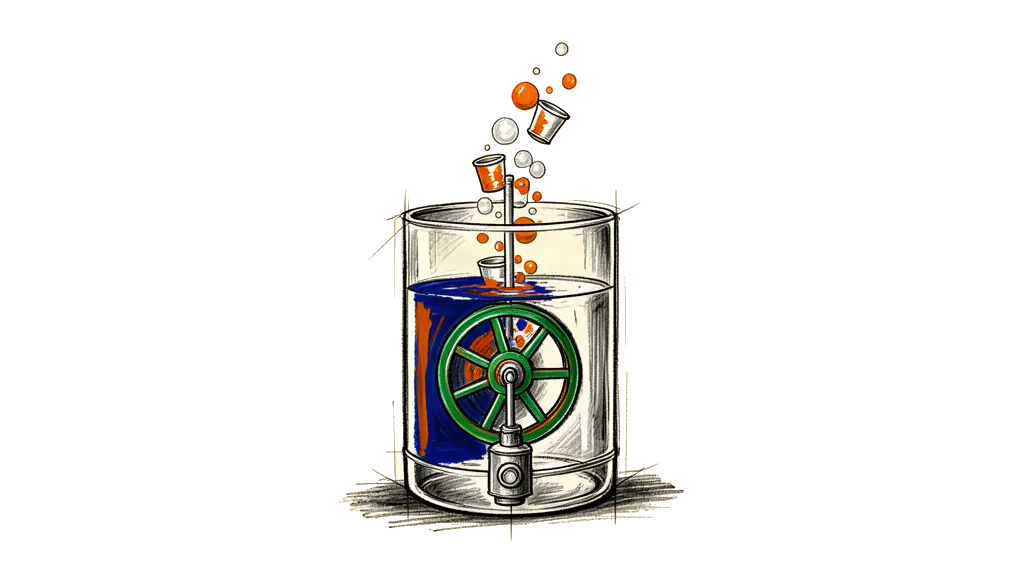
Put simply, there is a big water tank, a small air pump and a light flywheel with cups on its edge. This is how we think it could work.
At the bottom of the tank an air pump sends bubbles up through a tube. The rising air fills the small cups on the edge of the flywheel. The trapped air makes each cup float up, and that turns the flywheel. The flywheel is connected to a generator. In theory, when it turns, it could make enough power to light a small LED or charge a battery.
What we like about the design is that natural forces, buoyancy and air pressure, make it move. No fossil fuels.
Why we do this

Many places in the world, Zanzibar too, have problems with access to electricity. Power comes and goes, and the usual energy sources are often expensive and bad for the environment. This project tries another way, with basic parts and renewable resources, to get cheap and sustainable energy.
If it works, this air and water system could power small things like garden lights, water pumps or charging small devices.
Where we got stuck

Building the prototype was not easy. We had to answer questions like these. How do we balance the flywheel so it turns smoothly? What size and shape should the cups be to trap the air? How do we catch the rising air well, so none of it is wasted?
Every step taught us something. We are making progress, but there is a lot of room to get better.
How you can help

We share our work openly and want feedback from anyone who cares about renewable energy or DIY engineering.
If you know fluid dynamics, renewable energy or mechanical engineering, we would love to hear what you think. How would you build it? Do you see ways to make it more efficient?
We especially want ideas for catching the air better, turning the flywheel more efficiently and getting more energy out. If you see a part where we could do better, please tell us.
We are working on a small budget. Materials would help a lot, like small DC generators, light wheels or sturdy plastic containers. If you want to support us with money, every amount goes straight into the prototype.
Next we want to improve the prototype with your feedback and ideas, make it more efficient and test it for real use. We hope it becomes a small step toward energy that everyone can access and that lasts.
If you want to help us build this, we would love to hear from you. Advice, materials or just moral support, it all counts. Let’s work on this together and build something that could make a difference!
- 255775585555
- x.com/em